 English
 简体中文
简体中文
 عربي
عربي
 Русский
 Français
 Español
Optimizing Output: The Role of the Stationary vibrating screen
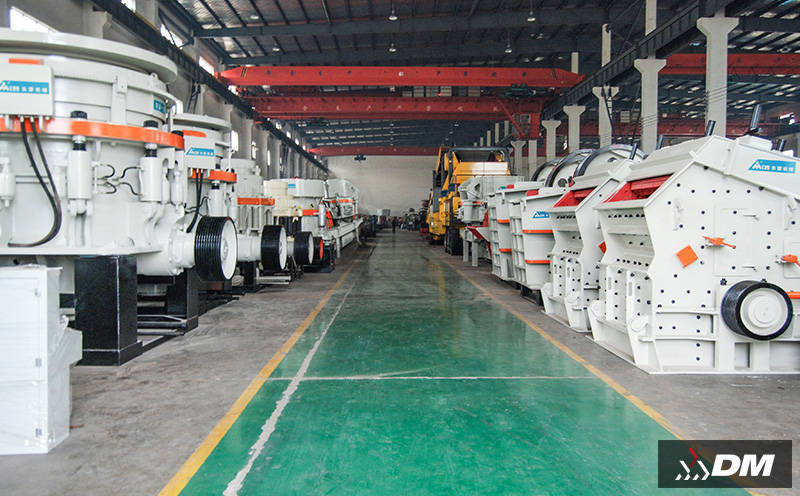
Optimizing Output: The Role of the Stationary vibrating screen
In the aggregate and mining industries, the crushing stage may be the muscle, but the Stationary Screening Plant is the brain. It is the final arbiter of quality, the checkpoint where raw material is transformed into high-value, market-ready aggregate. For plant managers, the challenge is not just to crush rock, but to consistently meet the increasingly stringent grading requirements of modern construction and infrastructure projects. When your final product is rejected due to contamination or improper sizing, your profit margin evaporates. Achieving operational excellence requires treating the Stationary Screening Plant as a strategic asset, rather than a mere secondary component of your circuit.
The Problem: When Screening Limits Your Market Reach
Every quarry operator has faced the frustration of "out-of-spec" material. Whether it is an excess of fines in your coarse aggregate or the presence of oversize material in your road base, these issues represent lost revenue and wasted energy. Conventional, aging screening setups often suffer from poor stratification, where material bed depths are inconsistent, leading to "blinding" of the screen mesh and significantly reduced capacity. Furthermore, if your Stationary Screening Plant is not properly integrated into the total circuit, you may find your production flow choked, forcing your upstream crushers to throttle down, which prevents your entire operation from reaching its full potential.
The Solution: Building a High-Efficiency Screening Circuit
To move beyond these constraints, you need a Stationary Screening Plant designed for precision and resilience. The following strategies are essential for transforming your screening circuit into a high-performance engine of profitability.
1. Precision Stratification and Throughput
The core of any Stationary Screening Plant is the vibrating screen unit itself. Modern designs utilize advanced multi-slope, multi-frequency technology to ensure optimal material stratification. By keeping the material agitated and moving, these systems prevent the fine particles from being "trapped" beneath the coarse aggregate. This ensures that every square meter of your screen media is working at maximum efficiency. By optimizing your deck angles, you can achieve a sharper cut point, significantly improving the uniformity of your end-product.
2. Modular Versatility for Market Shifts
Markets change, and the demand for different aggregate sizes fluctuates with local project needs. A high-value Stationary Screening Plant must be modular. By utilizing interchangeable polyurethane panels or wire cloth, your team can rapidly pivot between production configurations—such as shifting from concrete aggregate to base-course material—with minimal downtime. This versatility turns your facility into a responsive supply hub, capable of capturing new contracts that your competitors may not have the technical agility to fulfill.
3. Intelligent Structural Engineering
A Stationary Screening Plant is subjected to immense dynamic forces. The structural integrity of the main frame and the performance of the vibration exciter are non-negotiable. Premium plants employ stress-relieved, high-strength steel frames that absorb these forces, preventing the structural fatigue that leads to cracks and misalignment. Furthermore, advanced vibration exciters now allow for precise control of amplitude and frequency, which can be tuned to match the specific moisture content and abrasiveness of your feed material.
Achieving Maximum Uptime through Proactive Care
A high-performance plant is only as good as its maintenance regime. To ensure your Stationary Screening Plant delivers consistent results, shift from a "repair-on-failure" mindset to a data-driven, proactive model.
Predictive Maintenance: Utilize vibration analysis tools to monitor the health of your vibration exciters. Early detection of bearing wear can save you from catastrophic, unplanned shutdowns during peak season.
Media Management: Regularly inspect the screen media for tensioning issues and wear patterns. Using high-wear-resistance materials like specialized polyurethane can extend your maintenance intervals by 30-50%, drastically reducing your labor costs.
Load Distribution: Ensure that your feed system is providing a consistent, full-width feed to the Stationary Screening Plant. Uneven loading not only causes premature wear on the screen decks but also causes material to cascade off the sides, leading to significant product loss.
Conclusion: Elevating Your Competitive Edge
Investing in a robust, high-capacity Stationary Screening Plant is the most direct path to increasing the value of your production. By focusing on precise material stratification, modular adaptability, and rigorous, proactive maintenance, you move from simply "processing stone" to "manufacturing aggregate."
In a global market where infrastructure standards continue to tighten, the ability to deliver consistent, accurately sized product is your most powerful competitive advantage. By optimizing your screening circuit today, you are not just improving your output; you are ensuring that your business remains the preferred supplier for high-demand projects, driving long-term profitability and solidifying your reputation for quality in the mining and construction sectors.
Get In Touch With Us