 English
 简体中文
简体中文
 عربي
عربي
 Русский
 Français
 Español
Tracked Mobile Impact Crushers for Urban Municipal Infrastructure Projects
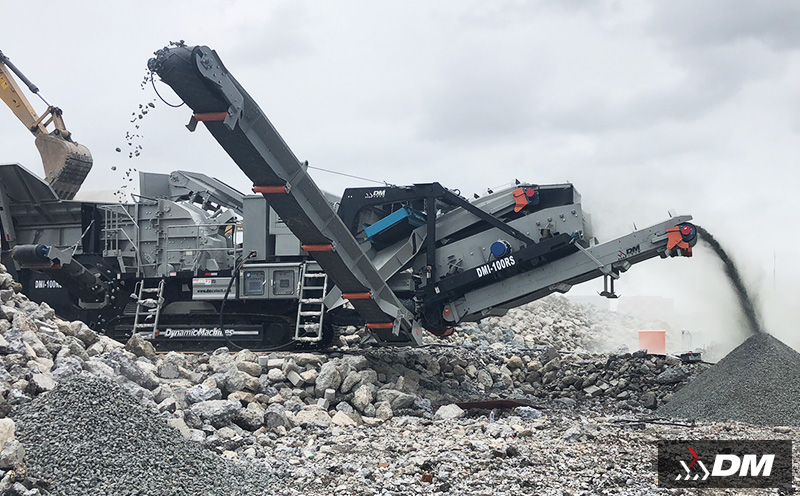
Cities around the world are in a constant state of renewal. Water mains are replaced, sewer systems are expanded, tram lines are extended, sidewalks are rebuilt, and old buildings are demolished to make way for new ones. Every one of these infrastructure projects generates excavated rock and demolition waste, and every one of them needs aggregate for backfill, base course, and concrete. But working inside a city presents unique challenges that standard quarry equipment was never designed to handle. Space is tight, neighbors are close, noise ordinances are strict, dust control is mandatory, and truck access is limited. This is where the urban-configured tracked mobile impact crusher comes into its own. Purpose-built for operation within city boundaries, these compact, low-profile, track-mounted impact crushers combine the particle-shaping performance of an impact crusher with full mobility, integrated dust suppression, and sound-attenuated engine compartments. Unlike larger tracked mobile jaw crusher units designed for quarry and heavy demolition work, the urban-spec mobile impactor is optimized for mid-size feed, quiet operation, and fast relocation between job sites across a metropolitan area.
The Unique Challenges of Urban Crushing
Operating crushing equipment inside a city is fundamentally different from working in a quarry or rural demolition site. First, space is severely constrained. Many urban work zones are just a few meters wide—trenches in city streets, small building footprints, utility corridors. Equipment must be compact enough to fit and maneuver in tight spaces. Second, noise is a critical issue. Residential and commercial neighbors are often just meters away, and municipal noise ordinances may limit equipment to 75 dB or less at the property line during daytime hours, with even stricter limits at night. Third, dust control is non-negotiable. Air quality regulations, pedestrian comfort, and nearby businesses all demand effective dust suppression. Fourth, truck traffic must be minimized. City streets are already congested, and each additional dump truck adds to traffic, emissions, and road wear. Fifth, aesthetics and public perception matter. Equipment that looks clean, modern, and well-maintained is more readily accepted by city councils and community groups.
How an Urban-Spec Tracked Mobile Impact Crusher Addresses These Challenges
Compact Footprint and Excellent Maneuverability
An urban-configured tracked mobile impact crusher is designed from the ground up for tight spaces. The machine is shorter and narrower than comparable quarry-duty units, with a tight turning radius thanks to independent track control. The feed hopper folds low for transport and operation in height-restricted areas such as under overhead utility lines or inside buildings. Despite its compact size, it still delivers real production capacity—typically 80 to 200 tons per hour depending on the model—more than enough for most municipal infrastructure projects.
Sound-Attenuated Design for Low-Noise Operation
Noise reduction is where the urban-spec tracked mobile impact crusher really differentiates itself from standard models. The diesel engine is housed in a fully lined, sound-attenuated enclosure with acoustic foam and double-walled panels. Cooling fans are sized for low noise rather than maximum airflow, and the exhaust system includes a heavy-duty muffler. The crusher itself is isolated from the chassis with rubber mounts to reduce structure-borne noise. The result is a machine that can operate within strict urban noise limits—often under 75 dB at 10 meters—without sacrificing performance. Some models even offer extra-quiet night-shift packages for projects that require overnight work near residential areas.
Integrated Dust Suppression Systems
Dust control is built in, not bolted on. A modern urban tracked mobile impact crusher includes multiple dust suppression points: water spray bars at the feed hopper, at the crusher inlet, at the discharge conveyor, and at the product stockpile. The water system is fed by an onboard water tank or a quick-connect city water inlet. Some higher-spec machines also include dust extraction fans with bag filters for enclosed crushing chamber applications. These systems ensure that visible dust emissions are essentially eliminated, keeping both regulators and neighbors happy.
Fast Relocation Between City Job Sites
Municipal contractors typically work on multiple small projects scattered across a city rather than one large site. A water main replacement program might have 20 or 30 separate dig sites in different neighborhoods over the course of a year. The tracked mobile impact crusher can be moved between these sites quickly—either on its own tracks for short distances or on a lowbed trailer for longer hauls across town. Setup at each new location takes less than an hour. This mobility means a single machine can serve an entire city's worth of infrastructure projects, keeping utilization high and capital cost per project low.
Key Urban Application Scenarios
Water and Sewer Main Replacement Programs
Older cities around the world are investing heavily in replacing aging water and sewer infrastructure. These trench-based projects generate excavated rock, broken pipe, and concrete from access pits. A compact tracked mobile impact crusher can be set up near the excavation zone, processing the excavated material into reusable aggregate for backfill and road base. Since the crushed product is used right there on site, haul-out and haul-in truck traffic is dramatically reduced—a major benefit on busy city streets.
Street and Sidewalk Reconstruction
Road resurfacing, sidewalk replacement, and curb and gutter work all generate broken concrete and asphalt. A tracked mobile impact crusher processes this material on site into a 0–32 mm or 0–45 mm product that can be used as base course for the new pavement. On-street crushing eliminates the need for fleets of dump trucks hauling debris out and virgin aggregate in, reducing construction-related traffic congestion and making the project more acceptable to local residents and businesses.
Urban Demolition and Infill Development
Small to medium urban demolition projects—old row houses, commercial buildings, parking structures—generate concrete and brick rubble that is perfect feed for a tracked mobile impact crusher. The machine fits into tight urban lots, processes the demolition debris into shaped recycled aggregate, and the product can either be used on site for the new foundation or hauled away as a saleable product. On infill development sites where the new building will need aggregate for backfill and site works, on-site crushing can virtually eliminate material hauling.
Light Rail and Tram Line Construction
Light rail and tram projects run through dense urban neighborhoods, with construction zones stretching for kilometers along existing streets. A tracked mobile impact crusher can advance along the alignment with the construction crew, processing excavated material and old pavement into base course for the new track bed. The cubical particle shape from the impact crusher is ideal for the well-graded, compactable base that light rail foundations require.
Park and Public Space Redevelopment
When cities redevelop parks, plazas, and public spaces, old concrete paths, foundations, and structures are removed and new landscaping and hardscaping installed. A tracked mobile impact crusher processes the old concrete on site, and the recycled aggregate is used for drainage layers, path base, and structural fill within the same park. This closed-loop approach is popular with city councils and environmental groups as a visible demonstration of sustainability.
Customer Benefits for Municipal Contractors and City Agencies
Reduced Truck Traffic and Congestion
The biggest benefit of on-site urban crushing is reduced truck traffic. Every ton of material processed and reused on site is one less truck leaving the job and one less truck arriving with virgin aggregate. For city transportation departments and residents alike, fewer construction trucks mean less congestion, less road damage, and safer streets. This benefit is so significant that many cities now give preferential evaluation to bids that include on-site material processing and waste diversion plans.
Compliance with Noise and Dust Regulations
Municipal contractors know that noise complaints and dust violations can shut down a job faster than any equipment failure. A properly specified tracked mobile impact crusher with sound attenuation and dust suppression allows contractors to operate within regulatory limits and maintain good relations with the community. Avoiding shutdowns and fines keeps projects on schedule and protects the contractor's reputation with the city.
Lower Material Costs and Higher Profit Margins
On-site crushing with a tracked mobile impact crusher reduces two major cost categories: disposal fees for waste material and purchase costs for virgin aggregate. Instead of paying to haul away rubble and paying again to bring in stone, the contractor turns waste into product. On many urban projects, these savings add up to a substantial improvement in project margin. The shaped aggregate from the impactor is also higher quality than simple crushed material, making it suitable for more applications and increasing its value.
Environmental and Sustainability Credentials
Cities are increasingly setting waste diversion and carbon reduction targets for construction projects. On-site crushing with a tracked mobile impact crusher directly supports these goals: it diverts construction waste from landfills, reduces truck-related CO₂ emissions, and promotes the circular economy. Contractors who can demonstrate these capabilities have a clear advantage in bidding for municipal contracts, especially on projects with formal sustainability requirements like LEED or BREEAM certification.
Selection Considerations for Urban Applications
Choosing the right tracked mobile impact crusher for urban work requires balancing several factors. Size and weight are critical—the machine must be compact enough for tight sites and light enough to transport on city streets without special permits. Noise performance should be verified with actual sound level data, not just marketing claims. Dust suppression system capacity and water consumption matter for cities with water restrictions or where water hookup is not always available. Feed size and throughput must match the typical project: most urban demolition and excavation material is under 400 mm, so a machine sized for that feed is more efficient than an oversized unit. Additional options to consider include overband magnets for rebar removal, remote control operation for safety in tight spaces, and additional sound attenuation packages for night work or extra-sensitive locations.
Operation and Maintenance in Urban Environments
Daily Pre-Start and Noise/Dust Checks
Before starting each shift, the operator should inspect the tracked mobile impact crusher for any issues that could affect noise or dust performance—loose enclosure panels, damaged water spray nozzles, worn conveyor seals. Maintaining the noise and dust control systems is just as important as maintaining the crusher itself in an urban environment.
Feeding Technique for Urban Sites
In tight urban spaces, feeding is usually done with a small excavator rather than a wheel loader. The operator should feed the tracked mobile impact crusher at a steady, controlled rate to maintain consistent crushing and avoid overloads that cause extra noise and dust. Overfeeding is a common cause of poor performance and increased emissions on urban job sites.
Regular Blow Bar and Apron Inspection
Blow bars and aprons wear during normal operation, and worn components can affect both product quality and noise level. Regular inspection and scheduled rotation or replacement ensure that the machine continues to perform within specification. In urban applications where downtime is disruptive, having a spare set of blow bars on hand is a good practice.
Track and Undercarriage Care
City streets are hard on tracks. Concrete, curbs, and debris can accelerate wear on track pads and undercarriage components. Regular cleaning and inspection of the undercarriage will extend service life. When moving the machine on paved surfaces, using street protection mats or limiting travel distance reduces both track wear and street damage.
Water System Maintenance
The dust suppression water system requires regular attention. Nozzles should be cleaned or replaced when they become clogged with sediment. Filters should be changed on schedule. The onboard water tank should be drained and cleaned periodically to prevent algae and bacterial growth. A well-maintained water system ensures reliable dust control with minimal water consumption.
Conclusion
Urban infrastructure renewal is one of the fastest-growing segments of the construction industry, and it demands equipment designed specifically for the unique challenges of city work. The urban-configured tracked mobile impact crusher fills that need perfectly, combining real crushing and shaping performance with the compact size, low noise, and effective dust control that urban environments require. For municipal contractors, city public works departments, and urban demolition specialists, this machine is more than just another crusher—it is a tool that enables on-site material recycling, reduces truck traffic, improves community relations, and lowers project costs. When selected with the right combination of size, noise attenuation, and dust suppression, and operated with attention to feed rate and maintenance, a tracked mobile impact crusher delivers both the production performance and the environmental compliance that modern urban construction demands. As cities continue to grow and renew their infrastructure, and as sustainability requirements become stricter, on-site mobile crushing will become not just an option but a standard practice for responsible urban construction.
Get In Touch With Us