 English
 简体中文
简体中文
 عربي
عربي
 Русский
 Français
 Español
How to start a mobile crusher?
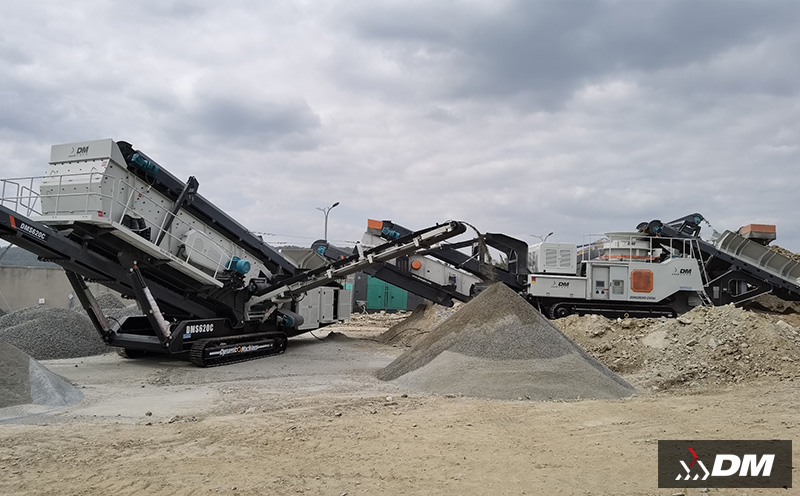
The mobile crusher, either crawler-type or wheel-type, is widely used in mines, construction waste treatment and tunnel projects due to its rapid deployment and flexible mobility. Correct startup operations not only ensure personnel and equipment safety, but also extend the service life of core components. The following is the standard startup procedure applicable to mainstream mobile crushing stations worldwide.
1. Pre-start Inspection (Daily Mandatory)
1. Appearance and Surroundings
Check for personnel or obstacles around the equipment and ensure no one stays within the operating area. Confirm the ground under the crawlers or tires is flat and solid without collapse risks. Verify all access doors and observation windows are fully closed and locked.
2. Lubrication and Liquid Level
Check the engine oil level (between upper and lower scale lines), hydraulic oil tank level and visible pipeline leakage. Inspect grease filling for vibrators and bearing housings according to manual requirements. Confirm coolant level for diesel-driven models.
3. Core Component Condition
Inspect wear parts such as jaw plates, blow bars and concave liners; replace severely worn parts in advance. Check screens for damage or blockage, conveyor belts for deviation, tearing and firm joints, as well as hydraulic pipes and electrical wiring for obvious damage.
4. Safety Devices
Reset emergency stop buttons, test alarm buzzers and warning lights, and ensure protective guards and safety railings are securely installed.
2. Standard Startup Steps
Step 1: Start the engine or connect power supply
Diesel model: Turn the key to the ON position for dashboard self-inspection. After the preheating indicator turns off, turn to START to ignite. Each startup shall not exceed 15 seconds with a 2-minute interval. Electric model: Switch on the main power and press the power button on the control cabinet.
Step 2: Idle Preheating
Run the engine or motor at idle speed for 3 to 5 minutes. Monitor oil pressure, water temperature and voltage to ensure all readings are within normal ranges. The diesel engine oil pressure shall not be lower than 0.5 bar at idle.
Step 3: Hydraulic System Preheating (Hydraulic-driven Models)
Operate hydraulic control handles to circulate hydraulic oil throughout the system. Load operation is allowed only when the hydraulic oil temperature rises above 20°C.
Step 4: Start Each Mechanism in Order
Correct sequence: Screening system → Conveyor belt → Crushing host → Feeder. Start the vibrating screen firstly and wait for stable operation. Then start discharge conveyor, side conveyor and feeding conveyor in sequence. Turn on the crushing host and check for abnormal noise and vibration. Finally, activate the vibrating feeder or belt feeder.
Step 5: Feeding Operation
Load materials into the hopper via excavator or loader with the principle of small quantity and continuous feeding. Operate at 30% to 50% rated capacity for the first 3 to 5 minutes to check discharge particle size. Gradually increase to full load after all indicators remain normal.
3. Abnormal Troubleshooting During Startup
Difficult engine startup: Stop attempts and check fuel, battery and starter motor.
No hydraulic pressure: Check oil inlet air intake and coupling slipping.
Abnormal crushing host noise: Stop feeding immediately, shut down the host and remove iron or non-crushable materials inside the crushing chamber.
Conveyor deviation: Adjust rollers and belt tension after shutdown.
Accidental emergency stop trigger: Reset the button, inspect circuits and restart.
4. Post-start Confirmation
Run under no load for 2 to 3 minutes to ensure stable operation of screens, conveyors and crushing units. Monitor bearing temperature (generally below 75°C with temperature rise not exceeding 40°C). Listen for periodic impact or friction noise, and check for oversized materials or excessive dust on discharge belts.
5. Safety Warnings
Do not open access doors or reach into the crushing chamber during operation. Never start the equipment with full load; keep the feeding hopper and crushing chamber empty. Avoid overloading feeding and putting metal, wood, rubber and other non-crushable materials. Do not open the radiator cap when the engine or hydraulic system is overheated.
6. Daily Shutdown Sequence
Reverse order of startup: Stop feeding → Empty materials inside the crushing chamber and shut down the host → Turn off conveyor belts → Stop screening system → Idle for 3 to 5 minutes for cooling → Cut off power supply. Standard startup and shutdown habits can reduce equipment failure rate by about 60% and greatly extend service life. Operators are recommended to receive professional training and follow the daily inspection checklist.
mobile crusher manufacturers
In the global fields of mining, construction waste recycling and tunnel engineering, mobile crushers have become the preferred choice for more and more project investors due to flexible transportation and rapid commissioning. As a professional mobile crusher manufacturer, Shanghai Dongmeng focuses on the R&D and manufacturing of crawler-type mobile crushing and screening equipment, providing efficient and reliable solutions for global users.
Advantages of Crawler Mobile Crushing Equipment
Compared with traditional fixed production lines and wheel-mounted mobile stations, crawler mobile crushing equipment features all-terrain trafficability with low ground pressure, stable operation in muddy, soft and undulating sites, no infrastructure investment, integrated design of feeding, crushing, screening and conveying, rapid self-moving transition without traction vehicles, and intelligent control with one-key startup, fault diagnosis and remote monitoring.
Core Strengths of Dongmeng Mobile Equipment
As a high-tech enterprise integrating R&D, production and sales of solid waste recycling, mobile and fixed crushing & screening equipment, Shanghai Dongmeng has rich experience in crawler mobile crushing industry. It adopts internationally matched main units with high wear-resistant materials, independently optimized hydraulic systems, modular combined design, complete environmental protection configurations such as dust suppression and sound insulation, and full life-cycle after-sales services including operation training, regular maintenance and original spare parts supply.
Applicable Materials and Scenarios
Dongmeng crawler mobile equipment is widely used in on-site recycling of construction waste, mine overburden and tailings reuse, tunnel muck crushing for road filling, and natural stone processing such as granite, limestone, basalt and river pebbles.
Model and Parameter Range
Crawler mobile jaw crushing station: Max feeding size ≤500mm, capacity 100–500 t/h, for primary crushing.
Crawler mobile impact crushing station: Max feeding size ≤600mm, capacity 120–400 t/h, for secondary crushing and shaping.
Crawler mobile cone crushing station: Max feeding size ≤300mm, capacity 100–450 t/h, for hard rock fine crushing.
Crawler mobile sand making station: Max feeding size ≤40mm, capacity 60–300 t/h, for manufactured sand production.
Crawler mobile screening station: Max feeding size ≤150mm, capacity 100–500 t/h, for material grading and dewatering.
How to Select Suitable Equipment
Provide information including material type, hardness, feeding size, target output size, hourly capacity and site power conditions, and Dongmeng technical team will recommend customized models.
Dongmeng Service Commitment
As a trustworthy mobile crusher manufacturer, Shanghai Dongmeng provides customized solutions from single machines to complete production lines. We support detailed technical documents, operation videos and latest quotations for global clients. Whether for mines, waste recycling plants or engineering contractors, our reliable tracked mobile crusher helps optimize operation costs and create long-term benefits.
Get In Touch With Us