 English
 简体中文
简体中文
 عربي
عربي
 Русский
 Français
 Español
Fixed Cone Crushers: Precision Secondary Crushing for Hard Rock Mining
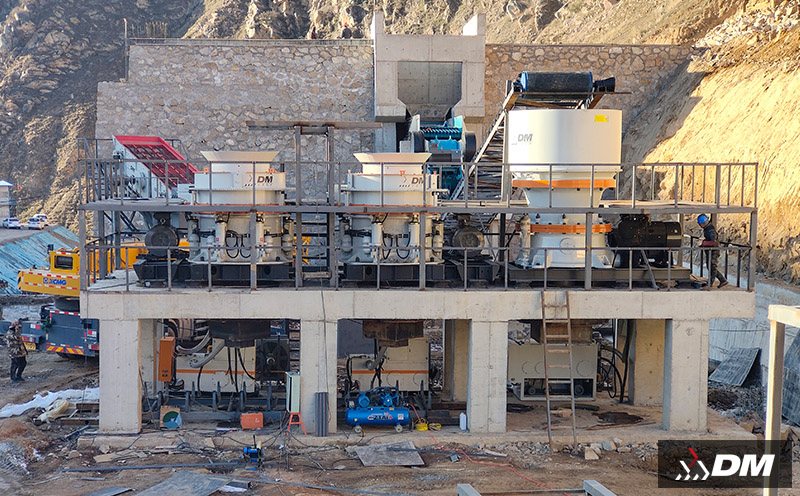
In any hard rock crushing circuit, the primary jaw does the rough work, but it is the secondary and tertiary stages that determine product quality, circuit efficiency, and ultimately the value of the final output. For operators processing granite, basalt, iron ore, copper ore, and other abrasive, high-hardness materials, choosing the right secondary crusher is make-or-break. This is where the fixed cone crusher excels. Built around a robust mantle and concave assembly that crushes material through compression rather than impact, a stationary cone crusher delivers high throughput, uniform product gradation, and exceptional wear resistance when dealing with the hardest feed materials. Whether installed in a large mining operation, a hard-rock quarry, or a high-capacity aggregate plant, the fixed cone crusher is the workhorse that turns primary crusher product into specification-grade material efficiently and economically.
Core Pain Points in Secondary Hard-Rock Crushing
Secondary crushing is where many operations lose efficiency. First, hard and abrasive ores wear out impact crushers and even lower-quality cone crushers at an alarming rate, driving up liner replacement costs and causing frequent unplanned downtime. Second, inconsistent product gradation hurts downstream processes. In mining, poor gradation reduces grinding mill efficiency and increases energy consumption per ton of concentrate. In aggregate production, poor gradation means more recirculating load, lower saleable yield, and products that barely meet specification. Third, high recirculating loads waste energy. If the secondary crusher cannot produce enough fines on the first pass, oversized material cycles back through the screen and the crusher repeatedly, consuming power without adding value. Fourth, adjusting the crusher to change product size or compensate for wear should be quick and precise, but many older designs require lengthy shutdowns and manual labor.
How a Fixed Cone Crusher Delivers Superior Performance
Compression Crushing for Abrasive Materials
The fundamental advantage of the fixed cone crusher is its compression crushing principle. Material is squeezed between an eccentrically gyrating mantle and a stationary concave liner. Because crushing occurs through gradual compressive force rather than high-velocity impact, wear is distributed more evenly across the liner surface and abrasive materials cause less damage per ton processed. For hard rock above 200 MPa compressive strength—such as granite, basalt, gabbro, and iron ore—the difference in wear life compared to an impact crusher is dramatic, often extending liner life by multiples.
Consistent Gradation and Cubical Product Shape
Modern fixed cone crusher designs with optimized chamber profiles produce a remarkably consistent product size distribution. The combination of stroke, speed, and chamber geometry creates multiple points of particle-on-particle crushing action, which not only reduces size but also improves particle shape. For aggregate producers, this means more cubical particles, fewer flat and elongated pieces, and a product that meets strict ASTM, EN, or local standards for concrete and asphalt aggregates. For mining operators, consistent feed size to the grinding circuit translates directly into higher mill throughput and lower specific energy consumption.
High Capacity in a Compact Footprint
For their size, fixed cone crusher units deliver impressive throughput. Stationary installation allows engineers to optimize the drive train, frame, and support structure for maximum crushing force rather than transportability. Hydraulic tramp release and clearing systems—standard on modern cones—protect the machine from uncrushable objects like drill steel or tramp metal, reducing the risk of catastrophic damage and enabling quick automatic clearing without manual intervention.
Application Scenarios
Hard-Rock Mining Secondary and Tertiary Circuits
In open-pit and underground mining operations, the fixed cone crusher is the standard solution for secondary and tertiary crushing. Primary crushed ore from a gyratory or large jaw crusher feeds into a secondary cone, which reduces material from 200–300 mm down to 50–70 mm. Tertiary cone crushers then take that product down to 10–20 mm for feeding into SAG mills, ball mills, or heap leach pads. The high availability and predictable wear of cone crushers are critical for mining operations where downtime costs are measured in tens of thousands of dollars per hour.
Basalt and Granite Quarry Aggregate Production
Hard-rock quarries producing high-quality road stone and concrete aggregate rely on fixed cone crusher units for secondary and sometimes tertiary stages. The combination of a fixed jaw crusher for primary reduction and one or two stages of cone crushing produces a well-graded, cubical product that commands premium prices. When the final product must meet strict flakiness index requirements, a tertiary cone with a short-head chamber is often the most economical solution.
Iron Ore and Mineral Processing Plants
Mineral processing plants depend on size reduction efficiency. The fixed cone crusher provides controlled, predictable reduction that allows metallurgists to optimize downstream grinding and separation processes. Modern cone designs with automated gap adjustment and power-based control systems can maintain consistent discharge size even as liners wear, stabilizing plant performance across the entire liner lifecycle.
Recycled Aggregate Hard Fraction Processing
While impact crushers are common in recycling, operations that process harder recycled material—such as concrete with high-quality hard aggregate embedded—can benefit from a fixed cone crusher as a secondary stage. The compression action is gentler on wear parts when the feed contains abrasive brick or hard natural aggregate, and the resulting product shape is often superior to what a single-stage impactor can achieve.
Customer Benefits and Return on Investment
Lower Wear Cost per Ton
For hard, abrasive feed, the fixed cone crusher consistently delivers the lowest cost per ton of any secondary or tertiary crushing technology. Manganese and high-chrome liner materials, combined with the compression crushing principle, mean longer intervals between liner changes and lower annual wear parts expenditure. For high-tonnage operations, these savings alone can justify the capital investment within a short payback period.
Improved Product Quality and Yield
A well-set-up cone crushing circuit produces more saleable product per ton of feed. Better shape means the product meets higher-value specifications. Tighter gradation control means less material has to be recrushed or downgraded. In aggregate terms, this means a higher percentage of premium-priced fractions—like 10–14 mm concrete aggregate—and less low-value crusher dust or oversized reject.
High Availability and Predictable Maintenance
Fixed cone crusher units are designed for continuous duty. With proper lubrication and scheduled liner changes, availability above 90% is routinely achieved. Maintenance is predictable: liner life follows a known curve based on feed hardness and tonnage, so shutdowns can be planned well in advance. Modern hydraulic designs also make liner changes faster and safer, reducing downtime during scheduled service.
Energy Efficiency
Compared to grinding mills, cone crushers are extremely energy-efficient size reduction devices. Investing in additional crushing stages—using a fixed cone crusher to produce a finer feed to the mill—can dramatically reduce overall circuit energy consumption. This "more crushing, less grinding" philosophy is a well-established optimization strategy in mineral processing and continues to drive demand for high-performance cone crushers.
Selection and Sizing Logic
Selecting a fixed cone crusher requires careful analysis of feed size, required throughput, target product size, material hardness, and abrasiveness. The first decision is chamber type: standard chambers for secondary crushing with larger feed, medium chambers for general-purpose secondary/tertiary duty, and short-head chambers for fine tertiary crushing. The second decision is crusher size and drive power, which must be matched to the expected throughput and recirculating load. Operators should also consider automation level—basic units with manual adjustment are fine for stable applications, but modern plants increasingly opt for automated systems with ASRI (Automatic Setting Regulation under Load) that maintain product size as liners wear. Tramp release systems, lubrication system type (oil vs. grease), and integration with plant SCADA systems are additional factors that influence the total value of the installation.
Operation and Maintenance Best Practices
To get the most from a fixed cone crusher, operators should follow several key practices. First, maintain a consistent, choke-fed condition whenever possible. Choke feeding improves particle shape, increases throughput, and distributes wear more evenly across liners. Second, monitor and control the feed size distribution—excessive fines in the feed can cause packing and uneven wear. Third, keep the lubrication system clean and at the correct temperature; bearing failures are almost always preceded by lubrication issues. Fourth, inspect liners regularly and replace them before they wear to the point where product gradation deteriorates or the mantle backing is exposed. Fifth, calibrate the CSS (closed side setting) periodically to ensure the actual gap matches the displayed value, especially after liner changes or major adjustments.
Conclusion
The fixed cone crusher occupies a critical position in any hard-rock crushing circuit. It bridges the gap between the rough primary product and the finely sized material required by downstream processes, whether those processes are aggregate washing and stockpiling or mineral grinding and flotation. For mining operators, hard-rock quarries, and high-capacity aggregate producers, the stationary cone is not just another piece of equipment—it is the stage that determines product quality, energy efficiency, and overall plant profitability. When selected correctly, installed properly, and operated within design parameters, a fixed cone crusher delivers years of reliable, low-cost production and stands as one of the most proven and valuable pieces of equipment in the crushing and screening industry.
Get In Touch With Us