 English
 简体中文
简体中文
 عربي
عربي
 Русский
 Français
 Español
What is a VSI Crusher? & Differences Between Cone Crusher and VSI Crusher
I. Basic Definition of VSI Crusher
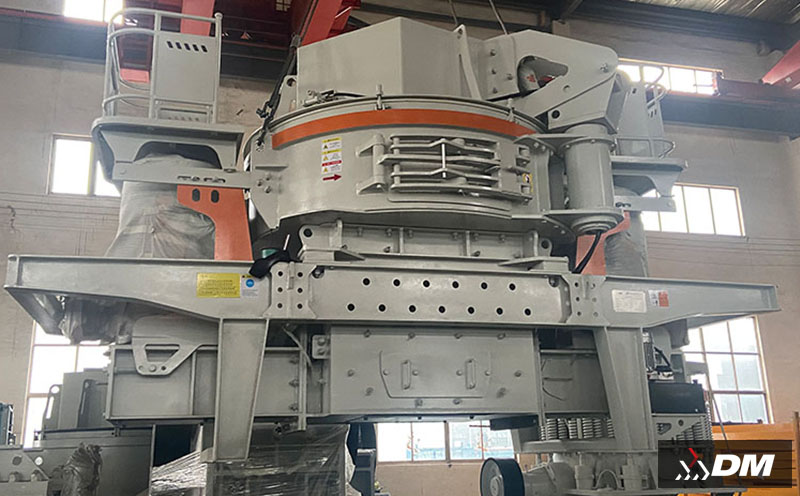
The VSI crusher, full name Vertical Shaft Impact Crusher, is an efficient crushing and sand-making equipment widely used in sand and gravel aggregate processing, ore crushing, construction waste recycling and other fields. It relies on two core crushing principles: "stone-on-stone" and "stone-on-iron". By means of the high-speed rotating rotor driving materials to generate centrifugal force, the materials collide, grind and crush in the crushing chamber, ultimately forming finished materials with uniform particle size and excellent particle shape.
II. Core Working Principle of VSI Crusher
The working process of the VSI crusher mainly consists of three stages: Firstly, materials enter the crusher through the feed inlet and are divided into two parts by the distributor—one part directly enters the center of the high-speed rotating impeller, and the other part falls into the annular area of the crushing chamber; Secondly, the materials in the impeller are accelerated and thrown out under the action of centrifugal force at a speed of tens of meters per second, colliding violently with the materials falling from the distributor and the impact lining plate on the wall of the crushing chamber; Finally, the crushed materials collide and grind repeatedly in the crushing chamber until they meet the preset particle size requirement, and then are discharged through the discharge outlet.
Among them, the "stone-on-stone" mode is suitable for sand making of medium-hard and above materials. It achieves crushing through mutual collision between materials, resulting in low wear of vulnerable parts; the "stone-on-iron" mode completes crushing by materials impacting the metal impact plate, with higher crushing efficiency, suitable for processing materials with lower hardness.
III. Main Characteristics of VSI Crusher
- Excellent particle shape: The finished materials are cubic with low content of needle-like and flake-like particles and reasonable gradation, meeting the aggregate standards of key projects such as expressways and high-speed railways;
- High crushing efficiency: The rotor speed is adjustable to adapt to different materials and discharge particle size requirements, and the processing capacity is 20%-30% higher than that of traditional crushers;
- Lower energy consumption: Adopting optimized cavity design and power matching, the unit energy consumption is much lower than that of hammer crushers and cone crushers;
- Convenient maintenance: Vulnerable parts adopt modular design, which is easy to replace, greatly reducing the shutdown maintenance time;
- Wide application: It can process various materials such as river pebbles, granite, basalt, limestone and construction waste, and can not only make sand but also shape aggregates.
IV. Application Scenarios of VSI Crusher
1. Sand and gravel aggregate production: Used for sand making of raw materials such as river pebbles and cobblestones in sand and gravel factories to produce construction sand and road aggregates;
2. Ore processing: Processing iron ore, copper ore, quartz stone and other ores to provide qualified crushed materials for the mineral processing link;
3. Construction waste recycling: Crushing and recycling construction waste such as concrete blocks and waste bricks into recycled aggregates to realize resource recycling;
4. Water conservancy and infrastructure projects: Providing high-quality sand and gravel aggregates for large-scale projects such as hydropower stations, expressways and bridges.
V. Differences Between VSI Crusher and Traditional Crushers
Compared with traditional equipment such as jaw crushers and cone crushers, the core advantage of the VSI crusher lies in its sand making and shaping capabilities. Traditional crushers mainly focus on coarse crushing and medium crushing, with poor particle shape of finished materials and high content of needle-like and flake-like particles; while the VSI crusher focuses on fine crushing and shaping. It can not only crush materials to fine sand grade (0-5mm) but also optimize the particle shape and gradation of aggregates. In addition, the VSI crusher has a more compact structure and smaller floor space, making it more suitable for the layout of small and medium-sized sand and gravel production lines.
VI. Summary
As the core equipment in the modern sand making industry, the VSI crusher has become the mainstream choice in the sand and gravel processing field due to its characteristics of high efficiency, energy saving and excellent particle shape. With the continuous improvement of the quality requirements for aggregates in the infrastructure industry and the promotion of resource recycling by environmental protection policies, the application scope of the VSI crusher will be further expanded, providing important support for the green development of the building materials industry.
What are the Differences Between Cone Crusher and VSI Crusher?
I. Different Core Working Principles
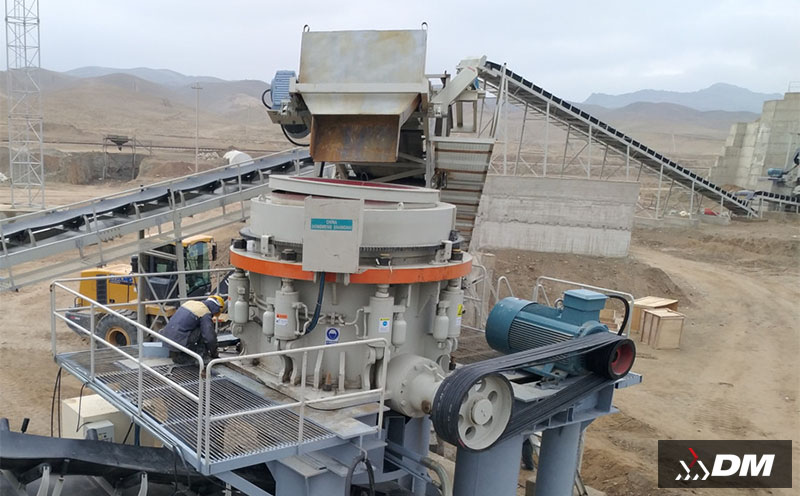
The cone crusher works based on the laminating crushing principle. The motor drives the eccentric sleeve to rotate, making the moving cone swing periodically. The materials between the moving cone and the fixed cone are crushed by extrusion, bending and shearing forces. The whole process is centered on "extrusion crushing", and the materials are in a relatively static extrusion environment during crushing.
The VSI crusher (Vertical Shaft Impact Crusher) is centered on impact crushing. After entering the equipment, the materials are accelerated and thrown out by the high-speed rotating impeller, impacting the impact lining plate or other materials at a speed of tens of meters per second. Crushing is realized through the impact and grinding effect of "stone-on-stone" or "stone-on-iron", and the crushing process relies on the high-speed movement and collision of materials.
II. Different Crushing Links and Particle Size Positioning
The cone crusher is mainly used for medium crushing and fine crushing links, commonly in the secondary and tertiary crushing after coarse crushing. The discharge particle size is generally between 10-60mm (which can be fine-tuned by adjusting the discharge port size), and it cannot directly produce fine sand (0-5mm) that meets the construction sand standard. The finished products are mostly aggregate-grade particles.
The VSI crusher focuses on fine crushing and sand making links, and is the core equipment of the sand making production line. It can crush 10-30mm stone materials into 0-5mm construction sand, and at the same time shape the aggregates to improve their particle shape and gradation. The discharge particle size is finer and more controllable, meeting the dual needs of sand making and aggregate shaping.
III. Different Particle Shape and Quality of Finished Materials
Due to the extrusion crushing principle, the finished materials of the cone crusher have a relatively high content of needle-like and flake-like particles, irregular particle shape and uneven gradation. They can only meet the aggregate needs of ordinary construction projects, and are difficult to meet the high-standard aggregate requirements of key projects such as high-speed railways and expressways.
Through impact crushing and repeated collision grinding, the finished materials of the VSI crusher are cubic, with the content of needle-like and flake-like particles controlled below 5%. The particle shape is round and the gradation is reasonable. It can not only produce high-quality construction sand, but also the shaped aggregates can meet the quality requirements of high-end infrastructure projects.
IV. Different Applicable Materials and Working Conditions
The cone crusher has a wide range of adaptability to compressive strength, and can process medium-hard to extra-hard materials such as granite, basalt and iron ore (compressive strength ≤350MPa). It is suitable for the medium and fine crushing links of large-capacity and continuous ore crushing and large-scale sand and gravel aggregate production lines, with a single machine processing capacity of up to hundreds of tons per hour.
The VSI crusher is more suitable for sand making and shaping of medium-hard and below materials (compressive strength ≤280MPa), such as river pebbles, limestone and construction waste recycled materials. Although the single machine processing capacity is lower than that of the cone crusher of the same specification, it has higher efficiency in sand making scenarios. Moreover, the wear of vulnerable parts is related to the material hardness, and the wear will increase significantly when processing extra-hard materials.
V. Different Structure and Maintenance Characteristics
The cone crusher has a complex structure, with core components including moving cone, fixed cone, eccentric sleeve and main shaft. It is large in size and heavy in weight, making installation and commissioning difficult; the vulnerable parts are mainly the bowl liner and crushing wall, with a relatively long replacement cycle. However, replacing them requires shutting down and disassembling many components, resulting in long maintenance time and high requirements for operation technology.
The VSI crusher has a relatively compact structure, with core components including impeller, impact lining plate and distributor. It is small in size and occupies less floor space, making installation convenient; the vulnerable parts are mainly the impeller guard and impact block, adopting modular design. Replacement does not require disassembling the whole machine, with short maintenance time and lower operation threshold. However, the replacement frequency of vulnerable parts is higher than that of the cone crusher (especially in the "stone-on-iron" mode).
VI. Different Energy Consumption and Application Scenarios
The cone crusher has relatively high unit energy consumption but large single machine processing capacity. It is suitable for large-scale and continuous aggregate production scenarios, such as the crushing section of large sand and gravel factories and metal mines, mainly meeting the core demand for aggregate supply.
The VSI crusher has lower unit energy consumption and strong pertinence. It is mainly used in sand making production lines, aggregate shaping production lines, construction waste recycling sand making and other scenarios. It is especially suitable for small and medium-sized sand and gravel factories or projects that need to produce high-quality sand materials, and is also an essential equipment for aggregate processing of key projects such as high-speed railways and expressways.
VII. Summary
The core difference between the cone crusher and the VSI crusher lies in their different crushing principles. The former is mainly based on extrusion crushing, positioning in medium and fine crushing aggregate production; the latter is centered on impact crushing, focusing on sand making and aggregate shaping. In practical applications, the two are often used together: the cone crusher completes the medium and fine crushing of aggregates, and the VSI crusher further crushes the aggregates into sand or shapes them, jointly forming a complete sand and gravel processing production line to meet the material needs of different particle sizes and qualities.
Get In Touch With Us