 English
 简体中文
简体中文
 عربي
عربي
 Русский
 Français
 Español
What is a mobile crusher? 2026 Mobile Crusher Selection Guide: Types, Working Principles and Key Purchasing Points
A mobile crusher is a highly integrated and movable crushing equipment used in global mining, sand and gravel, infrastructure and solid waste recycling. It integrates feeding, crushing, screening and conveying into one unit, requires no infrastructure, enables quick relocation and on-site crushing, perfectly solving the problems of difficult relocation, high cost and long construction period of traditional stationary production lines. It is the mainstream choice for efficient and green crushing worldwide in 2026. Based on project experience in more than 80 countries, Shanghai Dongmeng provides a systematic selection guide for global readers to accurately match types, principles and scenarios, achieving efficient, economical and stable mobile crushing operations.
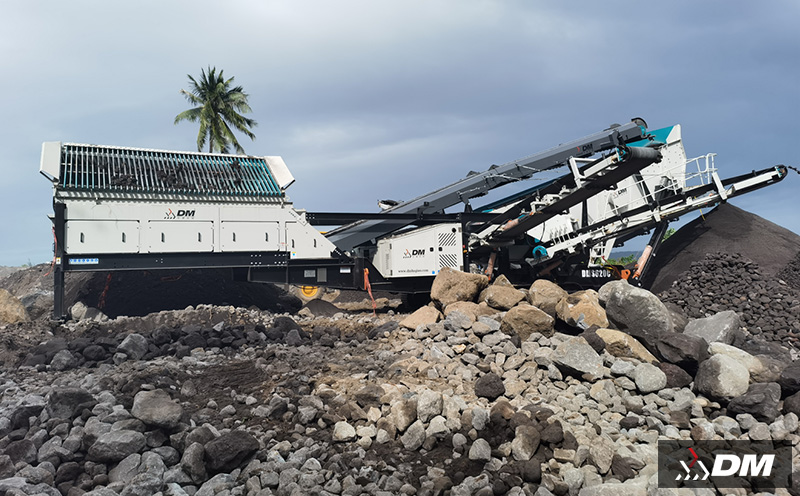
1. What is a mobile crusher? Core definition and advantages
A mobile crusher (also known as mobile crushing plant) is a movable crushing unit that highly integrates crushing main engine, mobile chassis, power system and auxiliary equipment. It can work independently or in multiple units to realize "ready-to-use production, flexible relocation and on-site crushing".
Core advantages
- Strong mobility: wheeled / crawler chassis, fast relocation, no infrastructure, saving more than 60% of site and relocation costs.
- High integration: integrated design combining feeding, crushing, screening and conveying, completing the whole process with a single machine.
- Wide adaptability: suitable for mines, construction sites, solid waste yards and other scenarios, handling complex terrains and variable working conditions.
- Eco-friendly and efficient: equipped with dust removal and noise reduction, low energy consumption and low emissions, meeting global environmental standards.
- Fast production: ready to work upon arrival, shortening project cycle and realizing quick payback.
2. Main types of mobile crushers (mainstream globally in 2026)
Classified by mobile chassis (core distinction)
Wheeled mobile crusher
Drive: towed by tractor, fast road transfer and low cost.
Application: flat sites, road transportation, urban solid waste, small and medium-sized projects.
Advantages: affordable price, simple maintenance, convenient for sea shipping.
Crawler mobile crusher
Drive: hydraulic self-propelled, wireless remote control, all-terrain passability, slope climbing (≤30°).
Application: mountainous areas, muddy sites, mines, remote construction sites, large projects.
Advantages: strong off-road capability, no traction needed, safe operation and stable reliability.
Classified by crushing main engine (functional distinction)
Mobile jaw crusher (primary crushing preferred)
Principle: extrusion crushing between movable and fixed jaws, deep cavity V-type design.
Advantages: large feed opening (≤1200mm), large crushing ratio, suitable for all hardness rocks.
Application: primary crushing of large raw ore, mine first crushing, infrastructure stone processing.
Mobile cone crusher (secondary and fine crushing for hard rock)
Principle: eccentric swing of movable cone, laminated crushing.
Advantages: wear-resistant and durable, excellent cubic grain shape, suitable for continuous hard rock production.
Application: granite / basalt crushing, metal mines, high-grade aggregates.
Mobile impact crusher (soft rock / solid waste)
Principle: blow bar impact + impact plate collision, efficient crushing and shaping.
Advantages: excellent grain shape, economical cost, anti-clogging, suitable for soft rock / solid waste.
Application: limestone, construction waste, highway aggregates.
Mobile sand making machine (professional sand making)
Principle: centrifugal impact crushing (stone-on-stone / stone-on-iron).
Advantages: adjustable fineness, good grain shape, efficient sand making.
Application: manufactured sand, high-quality aggregates, construction sand.
3. Core working principle (standard process in 2026)
- Feeding: materials are evenly sent to the crushing host by vibrating feeder, with pre-screening for impurity removal.
- Crushing: the main engine (jaw / cone / impact) crushes materials according to corresponding principles.
- Screening: crushed materials enter the vibrating screen and are graded into finished products of different sizes.
- Conveying: finished products are output by belt conveyor; unqualified materials are returned for re-crushing (closed circuit).
- Movement: driven by wheeled / crawler chassis, quickly transferred to the next work site.
4. Key purchasing points for mobile crushers in 2026 (global universal)
1. Material properties (selection basis)
- Hardness: hard rock (granite) chooses jaw + cone crusher; soft rock (limestone) chooses impact crusher.
- Size: large materials (>500mm) choose primary jaw crusher; small and medium blocks choose secondary and fine crushers.
- Moisture content: >8% chooses anti-clogging type (impact / heavy hammer crusher).
2. Working scenario (chassis selection)
- Flat / road: choose wheeled type, low cost and fast transfer.
- Mountain / muddy / mine: choose crawler type, all-terrain and remote control operation.
- Urban / eco-friendly: choose diesel-electric hybrid, low noise and dust removal, compliant emissions.
- No power grid: choose diesel drive for independent operation.
3. Capacity and finished products (core demand)
- Capacity: 50-500 tons per hour, select models according to demand with 10-20% margin.
- Finished products: with screening station for multi-size; mobile sand maker for sand making; impact / cone crusher for better grain shape.
4. Configuration and quality (high standard in 2026)
- Chassis: heavy steel structure, high-quality bearings, hydraulic drive.
- Main engine: wear-resistant steel (high manganese / high chromium), intelligent control, automatic discharge.
- Power: imported motor / diesel engine, diesel-electric hybrid, energy-saving and low consumption.
- Environmental protection: standard dust removal, noise reduction and spray system.
- Intelligence: remote monitoring, fault diagnosis, automatic speed regulation.
5. Service and support (key for global procurement)
- International certification: ISO9001, CE, meeting global standards.
- Global service: 7×24 response, on-site installation, fast spare parts supply.
- Modularization: easy for sea shipping, quick assembly and global deployment.
Which is better: mobile crusher or stationary crusher?
1. Core definition and essential difference
Mobile crusher: integrates feeding, crushing, screening and conveying on wheeled / crawler chassis, no infrastructure, self-movable, ready-to-use, suitable for multi-site, short-cycle and scattered material scenarios.
Stationary crusher (stationary production line): fixed on concrete foundation, long-term fixed operation, large-scale continuous production, suitable for concentrated raw materials, stable sites and long-term operation projects.
2. Comprehensive comparison of core advantages and disadvantages (global universal)
Mobility and scenario adaptation
Mobile crusher
Advantages: all-terrain movement (crawler can climb 30° slope), fast relocation, no infrastructure, small space occupation, suitable for remote mines, urban solid waste, temporary infrastructure and multi-site mobile operations.
Limitations: not suitable for ultra-large-scale and ultra-long-term fixed production.
Stationary crusher
Advantages: fixed site, regular layout, continuous and stable, suitable for large mines, large-scale sand plants and long-term fixed production lines.
Limitations: long infrastructure cycle (1-2 months), immovable, extremely high relocation cost.
Capacity and efficiency
Mobile crusher
Capacity: single machine 80-500t/h, combination up to 800t/h, efficient and flexible for small and medium capacity.
Efficiency: short integrated process, fast relocation and production (1-2 days), far more efficient than stationary lines in flexible scenarios.
Stationary crusher
Capacity: single line 500-2000+t/h, obvious advantage in ultra-large capacity.
Efficiency: long-term continuous stability, low unit energy consumption, optimal efficiency in large-scale production.
Investment and operating cost (key for global procurement)
Mobile crusher
Initial stage: high unit price, but no infrastructure, no long-term land rent, convenient sea shipping, flexible overall investment.
Operation: save more than 60% transportation cost (on-site crushing), less labor, convenient maintenance, high cost performance for short-term projects.
Stationary crusher
Initial stage: large investment in equipment + infrastructure + site, more economical for long-term large-scale production.
Operation: low energy consumption, low consumable cost, long service life, lower long-term operation cost for over 10 years.
Environmental protection and intelligence (global standard in 2026)
Mobile crusher
Advantages: modular eco-design (standard dust removal, noise reduction, spray), low emission and pollution, complying with EU, Middle East, Southeast Asia environmental regulations.
Intelligence: wireless remote control, remote monitoring, fault self-diagnosis, single-person operation, convenient and efficient.
Stationary crusher
Advantages: centralized and complete environmental system, long-term stable compliance, comprehensive intelligent control, suitable for large-scale centralized production.
Limitations: fixed emission point, needs large supporting environmental facilities.
Operation, maintenance and service life
Mobile crusher
O&M: modular design, convenient maintenance, global fast spare parts supply, 7×24 technical response.
Service life: 8-10 years with proper maintenance, suitable for mobile working conditions.
Stationary crusher
O&M: complex system, needs professional team, standardized long-term maintenance, global service network coverage.
Service life: 15-20 years+, stronger durability in long-term fixed working conditions.
3. 2026 global selection guide: match the right scenario
Choose mobile crusher for these global scenarios
- Scattered materials / multi-sites: scattered mines in Africa, temporary infrastructure in Southeast Asia, urban solid waste in Europe, bridge and road projects in the Middle East.
- Short construction period / fast production: emergency projects, short-term projects, pilot projects, production in 1-2 days, quick payback.
- Limited site / no infrastructure: mountainous, muddy, urban narrow sites, no hardening required, ready-to-use.
- Strict environmental protection / flexible emission: EU, Middle East and other high environmental standard areas, mobile emission reduction, lower compliance risks.
Shanghai Dongmeng recommendation: crawler type (all-terrain), wheeled type (road transfer), suitable for complex working conditions in more than 80 countries.
Choose stationary crusher for these global scenarios
- Concentrated raw materials / long-term production: large metal mines, large-scale sand bases, long-term fixed production lines (10+ years).
- Ultra-large capacity: projects over 1000 tons per hour, continuous large-scale production with optimal cost.
- Stable working conditions / high-standard finished products: high-grade aggregates, manufactured sand, precise and stable grain shape and size.
- Low-cost long-term operation: stable power, sufficient site, long-term unit cost lower than mobile lines.
Shanghai Dongmeng recommendation: jaw + cone + multi-layer screen stationary line, ISO9001 certified, suitable for global strict standards.
4. Shanghai Dongmeng global best practice: hybrid solution for higher efficiency
Mainstream global trend in 2026: mobile primary crushing + stationary secondary fine crushing / sand making, combining flexibility and stability.
- Mobile crusher: on-site primary crushing, less transportation, flexible relocation.
- Stationary line: refined crushing, sand making, screening, stable high-quality finished products.
Advantages: cost reduced by over 40%, efficiency increased by 30%, suitable for complex global projects.
5. Summary: the most suitable is the best
Mobile crusher: flexible, fast, eco-friendly, multi-scenario, first choice for short-term / mobile / scattered projects, mainstream for global small and medium projects.
Stationary crusher: stable, high-capacity, low-consumption, long-life, first choice for long-term / concentrated / large-scale projects, standard for global large projects.
As a global expert in crushing and screening, Shanghai Dongmeng provides a full range of mobile / stationary crushers, one-stop selection, accurate quotation and global services. Whether your project is mining in Africa, sand production in Southeast Asia, infrastructure in the Middle East or solid waste recycling in Europe, we cover both mobile and stationary solutions to help global customers achieve efficient crushing, cost reduction, efficiency improvement and sustainable profit.
Get In Touch With Us