 English
 简体中文
简体中文
 عربي
عربي
 Русский
 Français
 Español
Is rock crusher profitable?
The rock crusher business is a fundamental industry worldwide, closely linked to mining development, infrastructure construction, urban renewal and other fields. For investors, the answer is not simply "yes" or "no"—it depends on multiple variables. Below is an analysis from four dimensions: costs, revenue, risks and returns.
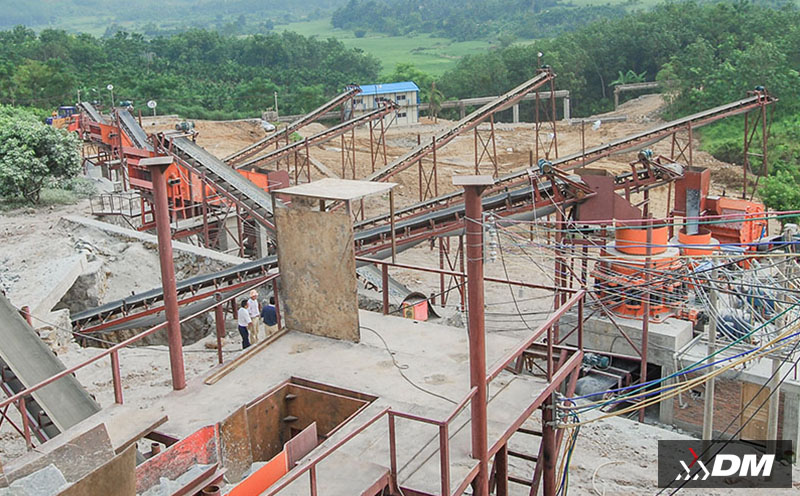
1. Profit Sources
The core profit model of rock crushing is processing low-value natural rock or waste into high-value sellable aggregates. Typical applications include:
Construction aggregates: Crushed stone and manufactured sand for concrete, asphalt pavements, railway ballast
Industrial minerals: Limestone for cement and metallurgical auxiliaries; granite for decorative stone or ballast
Solid waste recycling: Crushed construction waste replaces natural aggregates, enjoying dual benefits from disposal fees and aggregate sales
In different countries and regions, the factory price of high-quality aggregates usually ranges from $5–30 per ton, while the comprehensive crushing cost (power consumption, wear parts, labor, depreciation) is generally $3–15 per ton. The gross profit margin can reach $2–15 per ton.
2. Key Factors Affecting Profitability
Raw material acquisition cost: Own mines only need to pay for mining right amortization and stripping costs; outsourcing waste rock or construction waste may only require freight or even disposal subsidies. The lower the raw material cost, the greater the profit margin.
Crushing difficulty and energy consumption: High-hardness rocks (granite, basalt) have high wear part consumption and power consumption, and the processing cost per ton may be 2–3 times that of low-hardness limestone. However, high-hardness aggregates are also sold at higher prices.
Finished product price and transportation radius: Aggregates are low-value-added, high-weight commodities, and freight often determines competitiveness. The economic radius of road transportation is generally 50–100 kilometers, and railway or water transportation can be extended to hundreds of kilometers. Crushing plants close to consumer markets have natural advantages.
Equipment investment and capacity utilization: The investment for a small and medium-sized fixed crushing line is about $70,000–300,000, and mobile equipment is more expensive. When the capacity utilization rate is lower than 60%, the amortization pressure of fixed costs increases significantly.
Environmental compliance cost: Global supervision on dust, noise and wastewater is becoming stricter. Environmental protection investments such as spray systems, closed workshops and sludge water treatment usually account for 10%–20% of the total investment, but they are also entry barriers in compliant markets.
3. Typical Investment Return Calculation Example
Project Parameters & Values:
Equipment investment (including installation): $140,000
Hourly capacity: 100 tons
Annual operation: 250 days, 8 hours per day; Annual output: 200,000 tons
Finished product price (delivered): $12 per ton
Annual revenue: $2.4 million
Annual comprehensive cost (power, wear, labor, depreciation, transportation): About $2 million
Annual gross profit: About $400,000
The static investment payback period is about 2.5–3.5 years, which is a medium-to-high level among industrial projects.
4. Main Risk Warnings
Demand cyclicality: Engineering construction is affected by economic cycles, and price competition is fierce when demand declines
Environmental shutdown risk: Projects without legal EIA procedures or excessive emissions face mandatory production suspension
Equipment failure and maintenance: Crushing equipment requires frequent replacement of wear parts, and improper management will erode profits
Transportation cost fluctuation: Rising fuel prices directly affect aggregate delivery costs
5. Conclusion
Rock crushing can achieve considerable profits on the premise of stable market demand, reasonable raw material acquisition and standardized operation management. For starters, it is recommended to start with asset-light models such as construction waste recycling or providing processing services for existing quarries to reduce early risks. For mature investors, owning its own mine close to the urban market is still a stable medium and long-term industrial investment.
Before making a decision, it is recommended to spend three months researching local aggregate prices, competitors and environmental policies, then conduct a small-scale test crushing with specific materials to obtain real power consumption and wear data for calculation.
What is the best way to crush rock?
In mining, engineering construction and solid waste resource utilization, there is no unique answer to "the best way to crush rock"—the optimal solution depends on rock type, target particle size, capacity requirements and operating costs. The following summarizes four mainstream methods and their applicable conditions from global engineering practices.
1. Method Selection by Rock Hardness
Hard rocks (granite, basalt, diabase, iron ore)
Best method: Extrusion + layer crushing
Use jaw crusher for primary crushing, combined with cone crusher for secondary and fine crushing. The lamination principle of cone crusher makes rocks bear extrusion and bending stress between multi-particles, with low wear part consumption, suitable for large-output demand of high-hardness materials. This method accounts for more than 80% of global hard rock aggregate production lines.
Medium-hardness rocks (limestone, sandstone, dolomite)
Best method: Impact crushing
Impact crusher uses high-speed rotor to drive blow bars to impact rocks, and throws them to impact plates for re-crushing. This method has a large crushing ratio and cubic discharge shape, very suitable for producing high-quality manufactured sand and pavement base aggregates.
Soft or tough rocks (shale, gypsum, partially weathered rock)
Best method: Shear + grinding
Hammer crusher or toothed roll crusher can be used to shear, impact and grind materials with high-speed rotating hammers or toothed rolls, avoiding energy waste caused by excessive pulverization.
2. Best Choices for Special Working Conditions
Require frequent site transfer or multi-site operations
Best method: Mobile crushing
Crawler or tire mobile crushing stations integrate feeding, crushing and screening, and can directly reach the operation site. For tunnel muck treatment, on-site construction waste recycling and short-term rental projects, the comprehensive cost of mobile solutions is often lower than fixed ones.
Produce high-quality manufactured sand (≤5mm)
Best method: Vertical shaft impact sand making + gradation adjustment
Vertical shaft impact crusher (sand making machine) uses "stone-on-stone" or "stone-on-iron" principle to conduct high-speed impact and self-crushing on materials, producing round particles with extremely low needle-like flake content, which is currently recognized as the best sand making method.
3. Key Parameters Affecting Method Selection
Before choosing a crushing method, it is recommended to obtain the following data:
Rock compressive strength: >200MPa for hard rock, 80–200MPa for medium-hard rock, <80MPa for soft rock
Abrasion index: High-abrasion rocks should avoid high-speed impact equipment
Moisture content: When exceeding 8%, the fine crushing section is easy to block, and the process may need to be adjusted or pre-screening added
Target discharge particle size: Primary crushing (300–800mm) → Secondary crushing (30–300mm) → Fine crushing (5–30mm) → Sand making (<5mm)
4. Common Misunderstanding Reminders
Misunderstanding 1: Single equipment completes all crushing
Correct practice: Multi-stage crushing (primary + secondary + fine crushing/sand making) can balance efficiency and particle shape.
Misunderstanding 2: Impact crushing is suitable for all rocks
Fact: High-abrasion rocks (such as granite) using impact crushing will lead to rapid consumption of hammers and liners, and a sharp increase in operating costs.
Misunderstanding 3: Mobile equipment is less efficient than fixed ones
Fact: Modern mobile crushing stations adopt the same specification main engines, with crushing efficiency equivalent to fixed ones, only slight differences in site transfer advantages.
5. Dongmeng Solution Suggestions
Shanghai Dongmeng is a high-tech enterprise specializing in R&D, manufacturing and sales of solid waste recycling, mobile and fixed complete crushing and screening equipment. Adhering to "technology aligns with international standards", we provide customized solutions from single machine to entire production line according to your rock type, capacity demand and operating environment.
Preliminary selection suggestions:
Hard rock, large output, fixed site → Jaw crusher + Cone crusher solution
Medium-hardness rock, high particle shape requirements → Jaw crusher + Impact crusher solution
Multi-site, construction waste, tunnel muck → Crawler mobile crushing station
High-quality manufactured sand → Vertical shaft impact sand making machine + Gradation adjustment system
If you need to further understand the crushing process selection and investment budget for different rock types, please contact us for detailed information. As an experienced crusher supplier, Shanghai Dongmeng can provide customized solutions from single machine to entire production line based on your raw material characteristics and capacity requirements. Whether for hard rock, medium-hardness rock or construction waste, choosing a reliable crusher supplier helps you more accurately match equipment models and optimize operating costs.
Get In Touch With Us