 English
 简体中文
简体中文
 عربي
عربي
 Русский
 Français
 Español
Unlocking Value: The Power of Stationary Impact Crushers
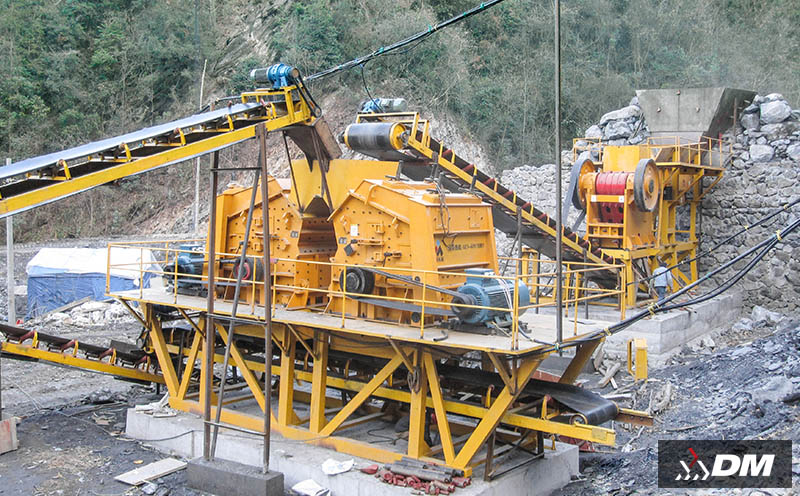
Unlocking Value: The Power of Stationary Impact Crushers
In the competitive landscape of aggregate production and material recycling, the demand for high-quality, cubical-shaped products is higher than ever. Whether you are supplying road-base materials or high-grade asphalt aggregates, the quality of your output is the primary driver of your market value. For many plant managers, the Stationary Impact Crusher has become the ultimate solution for achieving this precision, balancing high reduction ratios with the exceptional particle shape that secondary or tertiary circuits require.
The Problem: The Challenge of Product Quality
In traditional processing, achieving the desired aggregate shape while maintaining high throughput can be a persistent struggle. Under-performing crushers often result in slabby or elongated particles, which are frequently rejected in high-specification construction projects. Additionally, the operational cost of managing recirculating loads—due to improper product graduation—can quickly erode your profit margins. For plant owners, the challenge is clear: how to maximize the "sellable" yield per ton while keeping energy and wear-part costs under control.
The Solution: Strategic Advantages of Stationary Impact Crushers
The Stationary Impact Crusher serves as a versatile workhorse, capable of delivering superior product quality by utilizing high-speed impact energy rather than compression. By adopting this technology as a core processing solution, operators can unlock three distinct advantages:
1. Superior Cubicity Through High-Speed Impact
The core of the Stationary Impact Crusher is its heavy-duty rotor, which accelerates material to high velocities before it strikes the impact aprons. Unlike jaw crushers that break material via compression, the impact process fractures rock along natural cleavage planes. This result is a consistently high-quality, cubical product that meets strict international grading standards. This level of quality is essential for premium applications, ensuring your material is the preferred choice for major infrastructure contracts.
2. Advanced Automation and Control Systems
Modern Stationary Impact Crushers are no longer just mechanical units; they are digital assets. By integrating intelligent hydraulic adjustment systems, you can control the gap setting between the rotor and the impact aprons in real-time. This allows operators to compensate for wear or adjust the final product size without halting production. When paired with automated feed sensors, the system ensures the crushing chamber is perfectly "choke-fed," optimizing energy efficiency and preventing the motor overloads that plague older, manual setups.
3. Optimized Wear Component Management
For any impact-based system, the blow bars and impact liners are the most critical consumable components. A key part of our solution is the use of advanced metallurgy in blow bar manufacturing. By selecting the correct alloy—whether manganese-steel, ceramic-embedded, or high-chrome—for your specific feed material, you can significantly extend the interval between maintenance shutdowns. This reduces the Total Cost of Ownership (TCO) and ensures that your Stationary Impact Crusher spends more time producing revenue and less time sitting idle for liner changes.
Designing for Operational Sustainability
Achieving peak performance with a Stationary Impact Crusher requires a holistic view of the plant circuit.
Optimizing the Feed: Consistent feed size is the secret to stable throughput. Utilizing a primary jaw stage to ensure a uniform feed size into the Stationary Impact Crusher prevents unnecessary strain on the rotor and allows for finer control over the final output.
The Power of Direct Drive: Many high-capacity operations are switching to direct-drive configurations. By eliminating transmission losses, a direct-drive Stationary Impact Crusher significantly reduces kilowatt-per-ton consumption, aligning your operation with today’s critical energy-saving mandates.
Safety and Inspection: Modern designs prioritize access. With hydraulic opening systems for the housing, internal inspections of the rotor and aprons can be conducted safely and quickly, encouraging a culture of proactive, data-driven maintenance rather than crisis management.
Strategic Deployment for Growth
The decision to implement a Stationary Impact Crusher is a commitment to quality. As your operation scales, the ability to produce a reliable, uniform product at a low cost-per-ton is what distinguishes your business from competitors. By selecting a machine that offers flexibility in impact apron settings, a robust rotor assembly, and smart integration with your existing PLC control systems, you create a scalable foundation for future growth.
Conclusion
Your crushing circuit is the heart of your profit engine. The Stationary Impact Crusher offers the perfect blend of performance, versatility, and cost-efficiency. By focusing on the strategic integration of these machines—supported by high-quality blow bars and intelligent process automation—you can ensure your aggregate plant is not just keeping up with market demand, but leading it.
The path to high-margin production is paved with precision. By investing in the right impact technology today, you are securing the reliability and product excellence required to thrive in the complex global construction and mining market.
Get In Touch With Us