 English
 简体中文
简体中文
 عربي
عربي
 Русский
 Français
 Español
Stable and Reliable Primary Crushing Solutions for Quarries
Crushers In many overseas quarry and aggregate production projects, the biggest pain point is often not the lack of equipment, but the insufficient stability of the whole production line. The size of run‑of‑mine ore keeps changing with uneven hardness, and the mud content is extremely high during rainy seasons. Meanwhile, market requirements for finished materials used in concrete, roadbeds and municipal infrastructure are becoming increasingly strict. If the primary crushing link is not robust and stable, downstream equipment such as cone crushers, impact crushers and vibrating screens will operate under over‑load or under‑load conditions, resulting in actual output far below the designed capacity.
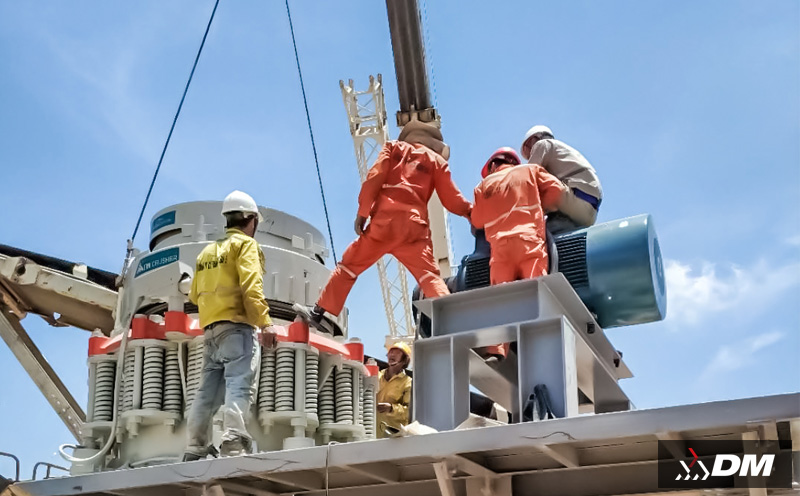
For customers operating stationary quarries, stationary jaw crushers are usually an important starting point for building production lines with long service life, controllable operating costs and stable output. Different from the simple view that "jaw crushers only break big rocks into small pieces", they actually function to protect the entire downstream system in practical projects. Making the right choice at this stage can reduce blockages, lower abnormal wear, shorten downtime and help investors achieve more consistent commercial output.
Pain Points of Stationary Quarries
Mine owners across Southeast Asia, Africa, the Middle East and South America frequently encounter a common problem: output of the same production line fluctuates drastically from shift to shift. Primary crushers are prone to blockages when over‑sized blasted rock, uneven feeding or mud‑mixed materials appear. Improper discharge‑gap adjustment leads to over‑large discharged material, which puts tremendous pressure on secondary crushing. Consequently, the whole production line consumes more power, wear parts wear faster, and operation teams have to carry out frequent manual intervention.
Under such circumstances, the selection of stationary jaw crushers must be based on actual mine characteristics instead of merely focusing on the initial purchase price. Rock hardness, maximum particle size after blasting, moisture content, hourly output requirements and mine expansion plans all influence equipment configuration. Undersized equipment will force the production line to run continuously at its limit. If oversized equipment is selected without matched feeders, belt conveyors and vibrating screens, it will not only cause waste of investment, but also fail to improve overall efficiency.
Project‑Oriented Primary Crushing Solutions
An efficient solution normally starts with material investigation. For highly abrasive rocks such as granite, basalt or river pebbles, priority should be given to robust body structure, wear‑resistant jaw plates and high‑rigidity frames. For limestone or dolomite, emphasis should be placed on production capacity, feeding stability and the capability of rapid particle‑size reduction to meet demands for construction aggregate production. In both scenarios, stationary jaw crushers need to be integrated with hoppers, vibrating feeders, impurity‑removal systems and matching belt conveyors.
Different from simple single‑unit sales, systematic solutions enable customers to clearly understand the relationship between feed opening size, crushing stroke, discharge gap and actual output. For example, if a quarry targets 300 tons per hour output, users should not simply choose a jaw crusher rated exactly 300 tons per hour under ideal conditions. Sufficient allowance must be reserved for over‑sized stones, maintenance time, humidity fluctuations and peak‑season production increase. With reasonable design margin, the production line runs more smoothly and the cost per ton of finished product is generally lower.
Application in Aggregate Production
For plants producing stone materials of 0‑5 mm, 5‑10 mm, 10‑20 mm and 20‑31.5 mm specifications, primary crushing determines the continuity of material flow. Stable discharge particle size from jaw crushers enables downstream cone crushers to produce more well‑graded products, and improves working efficiency of vibrating screens. This is especially critical for projects supplying materials for commercial concrete, highways, bridges, ports and industrial parks.
In markets with strict requirements on particle shape, stationary jaw crushers serve as powerful coarse‑crushing units, followed by cone crushers or impact crushers to optimize particle shape. This layout helps strike a balance among production capacity, wear‑related costs and product quality. Instead of overburdening one single machine with all tasks, clear responsibilities are assigned to each processing stage.
Operational Benefits Brought to Customers
The primary benefit is reduced unplanned downtime. Jaw crushers with solid structure, well‑designed crushing chamber and convenient discharge‑gap adjustment assist operation teams in coping with material variations efficiently. Secondly, pressure on downstream equipment is relieved. Stable discharge size avoids violent fluctuation of the production line, prevents frequent motor overload, and makes the service life of wear parts more predictable.
Thirdly, it facilitates cost accounting per ton. For mine owners holding long‑term supply contracts, cost per ton matters more than equipment purchase price. Stationary jaw crushers can work continuously on one site for many years, so foundation, steel structures, electric control systems and maintenance space need to be planned in the early phase. With reasonable layout, workers can inspect jaw plates, bearings, belts, lubrication points and safety bolts conveniently, lowering risks of major breakdowns.
Indispensable Selection Logic
Customers should start with several key questions: What is the maximum material size? What commercial output needs to be achieved? What are the end‑use scenarios of final products? Will the production line be expanded in the coming years? If rocks in the project are large and hard, the feed opening must be sufficiently wide. For high‑output requirements, feeders and belt conveyors must match stationary jaw crushers. For mines with long rainy seasons, the equipment’s capacity to process high‑humidity and mud‑bearing materials should be taken into consideration.
Besides, spare‑part service cannot be ignored. Clear replacement schedules are required for consumable components including jaw plates, liners and bearings. Equipment with low purchase price but hard‑to‑source spare parts, long delivery cycles or weak technical support may push up total costs significantly. For overseas customers located far from manufacturers, installation guidance, operator training and remote technical support also constitute important parts of investment value.
Maintenance and Return on Investment
Proper maintenance means more than repairing equipment after failures occur. For stationary jaw crushers, regular inspection routines should cover discharge gap, jaw‑plate wear level, belt tension, bearing temperature, grease level and frame condition. Daily recording of operating data allows mine operators to detect abnormal trends before breakdowns take place. This professional management mode is particularly suitable for large‑output mines with strict delivery contracts.
In terms of return on investment, reliable primary‑crushing equipment increases effective monthly operating hours. Even cutting downtime by several hours every week can bring remarkable revenue growth through higher output. Combined with well‑planned production‑line layout, stationary jaw crushers represent more than mere equipment procurement; they serve as cornerstones for quarries to lift supply capacity, maintain customer reputation and expand market share.
Conclusion
For stationary quarries, selecting stationary jaw crushers should be regarded as a strategic decision concerning the whole production line. Appropriate equipment can handle hard‑to‑control feed materials, protect downstream crushing and screening sections, stabilize aggregate quality and cut production cost per ton. When customers evaluate projects from perspectives of planning, daily operation and long‑term profit, the value delivered by a solid and reliable primary‑crushing solution far outweighs simple comparison of initial purchase prices.
Get In Touch With Us