 English
 简体中文
简体中文
 عربي
عربي
 Русский
 Français
 Español
Move Faster With a Tracked Mobile Cone Crusher
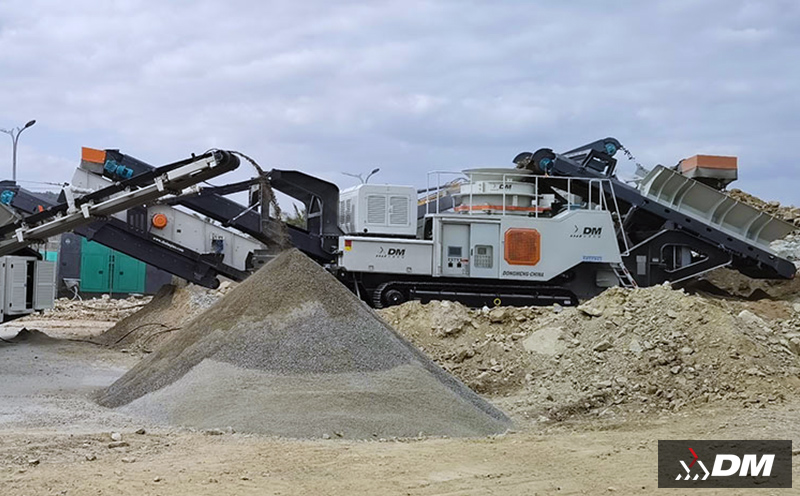
Move Faster With a Tracked Cone Crusher
Contract crushing is a logistics business as much as it is a processing business. Winning work is only the beginning. Real profitability depends on how fast a crew can mobilize, how efficiently the plant can adapt to changing feed, and how consistently the finished material can meet customer requirements across multiple sites. This is why many experienced contractors are rethinking traditional fixed setups and turning toward the tracked mobile cone crusher for secondary and tertiary crushing.
For projects that shift from quarry to quarry, from demolition site to road project, or from one regional contract to another, equipment mobility is not a convenience. It is a strategic tool. The tracked mobile cone crusher allows operators to produce shaped material closer to the source while maintaining the relocation flexibility required in competitive contract environments.
Overseas customers working in distributed markets, temporary quarry programs, or urban redevelopment projects are often under pressure to move fast and produce quality aggregate without building a permanent plant at each location. In that environment, the tracked mobile cone crusher offers a practical answer.
Why Fixed Secondary Crushing Can Limit Contractors
A fixed secondary plant can perform well on a long-term site, but contractors often face a different reality. They need to process material in one region this month and another region next month. They may start with blasted rock, move to recycled concrete, and then support an infrastructure package with stricter aggregate specifications.
Under these conditions, a fixed approach creates several operational limits:
Relocation takes too long
Dismantling, transport, and reinstallation can consume valuable contract time.
Site-specific civil work increases cost
Temporary jobs rarely justify major foundations and permanent structures.
Quality production is pushed too far from the source
Material may need to be hauled to a distant plant before shaping and classification.
Capacity flexibility is reduced
It is harder to scale the circuit for short-term or variable-demand contracts.
The tracked mobile cone crusher solves these problems by bringing high-quality secondary or tertiary crushing into a format that can move with the business.
The Main Advantage: Quality Aggregate Without Permanent Layout
The commercial power of a tracked mobile cone crusher lies in its combination of quality and mobility. A jaw unit may reduce the rock first, but the cone stage often decides whether the contractor can produce spec-driven aggregate that commands better pricing.
On many projects, customers do not just need crushed stone. They need usable stone with defined gradation and better particle shape. By positioning a tracked mobile cone crusher near the material source or directly behind a mobile jaw crusher, contractors can build a flexible crushing train that supports both movement and product quality.
This approach reduces unnecessary transport between stages and gives crews more control over output as site requirements change. It also helps contractors respond faster when one site demands road base while another demands a more tightly shaped aggregate.
Ideal Applications for Tracked Mobile Cone Crushing
The tracked mobile cone crusher works especially well when material quality matters but project duration or site layout does not support permanent infrastructure.
Multi-site contract quarrying
Contractors can relocate between quarries without rebuilding a fixed circuit each time.
Road and railway projects
Mobile secondary crushing helps create final aggregate closer to where it will be used.
Urban redevelopment and recycling
When paired with primary crushing, mobile cone units support flexible processing in tight spaces.
Temporary hard rock campaigns
Satellite deposits and short-term extraction zones can be processed efficiently.
Regional infrastructure packages
Where several work zones require material over a broad geographic area.
These conditions are increasingly common in overseas markets where construction demand is spread across multiple shorter-term projects.
What Buyers Should Consider Before Purchase
Not every mobile unit will fit every operation. Buyers should evaluate the tracked mobile cone crusher as a system component, not just a standalone machine.
Feed compatibility is critical. The unit must match the output from the primary stage, whether that stage is a tracked mobile jaw crusher or another source. Chamber design, setting range, throughput stability, and crusher protection systems all affect real-world performance.
Transport practicality also matters. The machine must be easy enough to move between sites without creating repeated permitting, escort, or trailer complications. Fuel use, engine support, dust suppression, stockpile interface, and compatibility with mobile screens should also be examined in advance.
Another important point is operating simplicity. In contract crushing, crews often work under time pressure. Controls should allow fast setup, clear adjustment, and easy fault identification. A machine that is too complex for field realities can quickly lose its economic advantage.
How It Improves Contractor Profitability
The tracked mobile cone crusher supports profitability in ways that go beyond hourly capacity.
Faster site turnover
Quicker mobilization and demobilization help crews spend more time producing and less time rebuilding plants.
Better product quality at temporary sites
Contractors can target higher-value output without investing in permanent infrastructure.
Lower internal haulage and transfer cost
Keeping the crushing train close to the source reduces handling distance.
Greater fleet utilization
One machine can support multiple sites across a year, improving capital efficiency.
More bidding flexibility
Contractors can pursue jobs that require both movement and finished material quality.
This combination is particularly powerful for companies that operate across different regions and need assets that match that business model.
Operating Strategy Matters
A tracked mobile cone crusher performs best when the whole mobile train is planned properly. Feed should be regulated, and the cone should not be treated like a catch-all machine for poorly prepared material. Proper screening, surge balance, and discharge management are essential.
Maintenance planning is equally important. Field crews should monitor wear parts, track systems, hydraulic components, and engine health on a strict schedule. Overseas operators should prioritize suppliers who can provide fast parts support and remote technical assistance. In mobile operations, downtime is especially expensive because it affects both production and contract scheduling.
Training should not be underestimated. Operators who understand chamber loading, crusher setting, and material flow can dramatically improve both wear life and final product consistency.
Return on Investment Comes From Flexibility
The strongest argument for a tracked mobile cone crusher is flexibility that turns into revenue. A fixed plant may deliver strong performance on one long-term site, but a mobile cone unit can create value across multiple contracts, regions, and material types.
That flexibility allows contractors to capture work that would otherwise be unattractive due to relocation cost or schedule pressure. It also helps protect profit margins when market demand shifts. In uncertain project environments, equipment that can follow opportunity is often more valuable than equipment that performs well in only one setting.
Conclusion
The tracked mobile cone crusher gives contractors a practical way to combine mobility with quality crushing. It supports faster relocation, stronger product control, and a business model that is built around changing sites rather than fixed infrastructure.
For overseas customers managing distributed projects, temporary quarry operations, or contract crushing fleets, the tracked mobile cone crusher offers a clear operational advantage. It helps teams move faster, produce smarter, and stay competitive wherever the next project appears.
Get In Touch With Us