 English
 简体中文
简体中文
 عربي
عربي
 Русский
 Français
 Español
Is stone crusher a profitable business?
Against the backdrop of sustained growth in global infrastructure construction, an increasing number of investors are turning their attention to the stone crusher industry. Is a stone crushing business truly profitable? This article provides an objective analysis for global readers from multiple dimensions, including market size, profitability levels, regional differences, risks, and challenges.
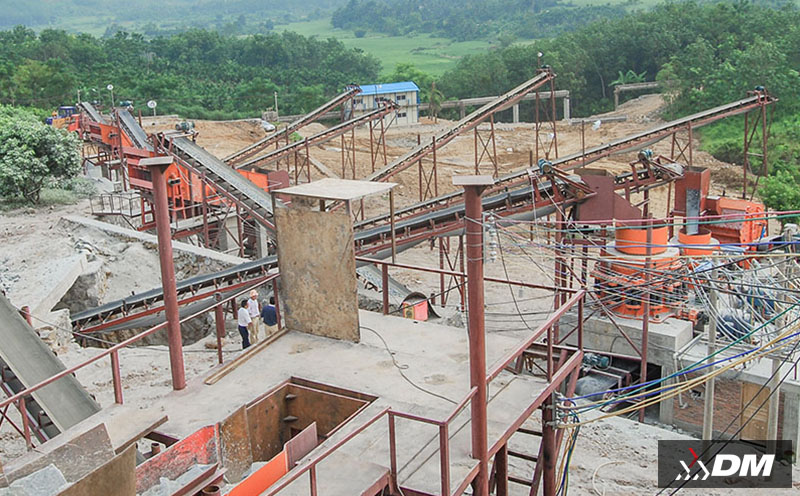
Market Size: A Growing Hundred-Billion-Dollar Industry
The market size of the stone crushing industry is remarkable. According to the latest market reports, the global construction aggregate market was valued at over 213.4 billion US dollars in 2024, with crushed stone accounting for more than 40% of total consumption—the largest category in the aggregate market. The global crushed stone market is projected to reach 5.58 billion US dollars by 2029, with a compound annual growth rate of 7.9%.
In terms of segmented markets, global sales of granite crushed stone reached 8.422 billion US dollars in 2024 and are expected to increase to 12.42 billion US dollars by 2031, representing a compound annual growth rate of 5.7%. These data indicate that the stone crushing industry is experiencing steady overall growth.
Profitability: From "Windfall Profits" to "Reasonable Returns"
Profitability in the stone crushing business varies by era, region, and operating model. In China’s sand and gravel industry, the "golden period" (2015-2020) brought astonishing profit margins—high-quality manufactured sand sold for nearly 200 yuan per ton, crushed stone for around 180 yuan per ton, with gross profits exceeding 60%.
However, the industry is undergoing profound adjustments amid market changes. Prices have continued to decline since the second half of 2021, with ex-factory prices of crushed stone in some regions now falling to 50-60 yuan per ton—down over 60% from peak levels. This marks a shift from "unregulated growth" to "standardized development," and the era of windfall profits has ended.
From a global perspective, profitability in the stone crushing industry is closely tied to macroeconomics. While overall profitability in the energy and materials sectors has fluctuated in recent years, economic profits of global non-financial enterprises rebounded to an annual average of approximately 1.2 trillion US dollars between 2020 and 2024.
Regional Differences: Opportunities and Challenges Coexist
Profit margins for stone crushing businesses vary significantly across regions worldwide:
Asia-Pacific: Accounts for over 38% of the global aggregate market, making it the world’s largest consumer market. Demand in China has contracted due to real estate regulations, while markets in India and Southeast Asia are emerging as new growth drivers.
North America: Holds approximately 25% of the global market share, dominated by granite aggregates with stable demand and healthy profit margins.
Europe: Represents about 22% of the market share. Driven by green building material policies, the proportion of recycled aggregates is rising, while strict environmental standards increase compliance costs.
Middle East & Africa: Makes up roughly 15% of the market, with demand fueled by high-budget infrastructure projects and smart city initiatives.
Cost Structure: The Key Determinant of Profitability
Costs in the stone crushing business mainly consist of the following components:
- Mining costs: Early investments in mine acquisition, blasting, and excavation - Processing costs: Operation of crushing equipment, power consumption, and replacement of wearing parts - Transportation costs: Account for over 30% of total costs, a critical variable affecting profits - Environmental and safety investments: Increasingly stringent environmental regulations have significantly raised compliance costs
Transportation costs deserve special attention—fluctuations in fuel prices directly impact profit margins, and logistics costs in remote areas can be 28% higher than in urban areas.
Major Risks and Challenges
1. Demand Volatility Risk
Demand for crushed stone is highly correlated with the macroeconomy. Factors such as real estate regulations and slowed infrastructure investment can lead to shrinking demand. In China, over 60% of sand and gravel is used in real estate and infrastructure, so reduced new construction projects have directly impacted market demand.
2. Oversupply Pressure
The industry’s "golden period" attracted massive capital inflows, leading to excessive capacity expansion. When demand growth slows, oversupply intensifies price competition.
3. Policy and Environmental Risks
Changes in policies such as environmental approvals and mining licenses can disrupt project progress. Nearly 26% of total producers report delayed supply schedules due to environmental permitting issues. Investments in environmental protection equipment also add cost pressures.
4. Trade Policy Impacts
Escalating US tariffs and resulting trade tensions in 2025 are affecting the mining industry. Higher tariffs on imported heavy machinery, drilling tools, and components have driven up capital and operating expenditures.
Key Factors for Successful Operations
Despite challenges, many enterprises remain profitable in the stone crushing industry. Key success factors include:
Scale Effect: The world’s top 500 enterprises capture the vast majority of economic profits, with scale advantages reflected in higher return on capital. Large enterprises expand market share by controlling mine resources and logistics networks.
Cost Control Capability: Optimizing mining plans, reducing comprehensive costs, and improving equipment efficiency are core strategies to address price pressures.
Product Differentiation: Transitioning from ordinary aggregates to high-quality and high value-added products yields better profit margins.
Market Diversification: Expanding sales channels beyond large projects to small and medium-volume customers, and entering segmented markets such as rural self-built housing and landscaping.
Intelligent and Green Development: Investing in automated production, green mine construction, and solid waste recycling aligns with policy guidelines and enhances long-term competitiveness.
Conclusion
Returning to the original question: Is a stone crushing business profitable?
The answer is: Yes, but it is no longer a "get-rich-quick" business.
During the industry’s golden age, demand outstripped supply, bringing substantial profits. Today, as the market matures, competition intensifies, and policies tighten, the stone crushing industry has entered a new phase of "reasonable profits and refined management."
For new entrants, success hinges on accurately assessing market demand, controlling transportation costs, securing stable mine resources, adopting efficient and energy-saving equipment, and building differentiated product advantages. Existing enterprises must continue to focus on cost reduction, channel expansion, and green transformation.
As an industry veteran summarized: "This industry will never return to the era of windfall profits. But those who do real business will not give up easily. Our generation has experienced the industry’s ups and downs—we know how to grow in good times and survive in adversity."
In the shift from "quantity-driven boom" to "quality-focused development," enterprises grounded in green development, powered by intelligence, and centered on efficiency stand at the start of a new cycle. For operators who can adapt to new rules and seize new opportunities, the stone crushing business remains a worthwhile sector to cultivate.
Stone Crusher Machine: How to Choose Crusher Manufacturers
In the global sand and aggregate, mining, and infrastructure construction sectors, choosing a reliable crusher manufacturer is often more important than selecting a single machine. A high-quality stone crusher can operate stably for over a decade, while a reliable manufacturer provides continuous technical support, spare parts supply, and service guarantees throughout the equipment’s lifecycle. How can you make a wise choice among numerous global crusher manufacturers? This article analyzes the key dimensions for you.
Evaluating the Manufacturer’s Technical Strength
1. R&D and Innovation Capability
Top crusher manufacturers possess independent R&D capabilities rather than simple imitation or assembly. A manufacturer’s technical strength is directly reflected in its R&D investment, number of patents, and size of the technical team.
Notable innovation directions include: - Optimized crushing cavity design - High-efficiency lamination crushing technology - Intelligent control systems - Energy-saving and environmental protection solutions
2. Completeness and Professionalism of Product Line
A reliable manufacturer typically offers a complete product portfolio, providing full solutions from primary to fine crushing, and from stationary to mobile equipment: - Jaw crushers: Core equipment for primary crushing - Cone crushers: For secondary and fine crushing - Impact crushers: Suitable for medium-hardness materials - Vertical shaft impact crushers: For sand making and shaping - Mobile crushing plants: For on-site crushing needs
A more comprehensive product line indicates deeper understanding of diverse working conditions and broader coverage of after-sales support.
Inspecting Manufacturing Quality and Craftsmanship
1. Material Selection and Heat Treatment Process
Crushers operate long-term in harsh, heavy-load, impact, and abrasive environments. Material selection and heat treatment of key components directly determine equipment lifespan: - Wear parts such as jaw plates, mantles, and concave rings should use high-manganese steel or high-chromium cast iron with strict heat treatment - Core transmission components like main shafts and eccentric shafts require high-strength alloy steel - Structural parts such as frames and adjustment rings should use integral cast steel or high-strength steel plate welding
2. Processing Accuracy and Assembly Quality
High-precision processing ensures stable equipment operation. Assessing whether a manufacturer has key processing equipment (CNC machining centers, large vertical lathes, precision boring machines) and a strict quality inspection system is critical for evaluating manufacturing capabilities.
Assessing Global Service Capabilities
For global buyers, the coverage and responsiveness of a manufacturer’s service network are critical.
1. Spare Parts Supply Guarantee
Crusher wearing parts require regular replacement, and spare parts availability directly determines downtime. Reliable manufacturers typically offer: - Warehousing centers covering major markets - Adequate inventory of commonly used spare parts - Efficient logistics and distribution systems
2. Technical Support and After-Sales Service
- On-site installation guidance - Operator training - Remote fault diagnosis capability - Fault response mechanisms during the warranty period
3. Multilingual Service Capability
For cross-border procurement, a manufacturer’s multilingual communication skills and familiarity with technical standards and regulations in different countries are important considerations.
Reviewing Global Application Cases and Reputation
1. Industry Experience
Experienced manufacturers have numerous successful cases worldwide. Reviewing project experience across different countries, materials, and working conditions helps assess their ability to handle complex scenarios.
Key case types to consider: - Large-scale mining projects (iron, copper, gold, etc.) - Aggregate production for highways and high-speed railways - Aggregates for water conservancy and hydropower projects - Construction waste recycling - Overseas Belt and Road Initiative projects
2. Customer Reputation
Gather customer feedback through industry exhibitions, professional forums, and peer referrals. Focus on: - Actual operational stability of equipment - Service life of wearing parts - Responsiveness of after-sales service - Reasonableness of cost-performance ratio
Evaluating Cost-Performance and Lifecycle Costs
Equipment purchase price is only an initial investment; total lifecycle costs deserve greater attention.
1. Energy Consumption Level
High-efficiency, energy-saving crushers significantly reduce long-term operating costs. Compare power consumption per ton of output across different manufacturers.
2. Wear Parts Lifespan
Replacement frequency and unit price of wear parts (mantles, concave rings, blow bars) are critical operating cost factors. Reliable manufacturers provide reference data on wear parts lifespan.
3. Maintenance Convenience
Design details such as ease of daily maintenance and component replacement directly affect downtime and maintenance costs.
Typical Characteristics of Global Manufacturers
Top global crusher manufacturers share these traits: - International vision: Products meet international standards and hold global market access certifications - Localized services: Branches or agent networks in major markets - Continuous innovation: Regular launch of new products and technologies to meet market demands - Stability and reliability: Strong brand reputation and long-term customer relationships
Suggested Selection Process
Step 1: Define Requirements - Material properties (hardness, abrasiveness, moisture content) - Target capacity (tons per hour) - Finished particle size requirements - Site conditions (power, space, climate)
Step 2: Market Research - Collect data on 3-5 potential manufacturers - Understand each brand’s market position and reputation - Consult peer users for operational experience
Step 3: Technical Communication - Conduct in-depth discussions with manufacturers’ technical teams - Obtain detailed technical solutions and configuration lists - Compare advantages and disadvantages of different proposals
Step 4: On-Site Inspection - Visit manufacturing facilities to inspect production processes and quality control - Inspect operating sites of the same equipment model if possible
Step 5: Comprehensive Evaluation - Matching degree of technical solutions - Product quality and reliability - Service support capabilities - Cost-performance ratio and lifecycle costs
Conclusion
Choosing a stone crusher manufacturer essentially means selecting a long-term partner. A crusher often operates for over a decade, during which equipment stability, manufacturer after-sales support, and spare parts availability directly impact production efficiency.
Among global crusher manufacturers, those with profound technical expertise, strict quality control, and comprehensive service networks are more likely to become trusted partners. Whether you are in Asia, Africa, the Americas, or Europe, engaged in mining, stone processing, or construction waste recycling, choosing a truly reliable manufacturer is a cornerstone of project success.
Get In Touch With Us