 English
 简体中文
简体中文
 عربي
عربي
 Русский
 Français
 Español
Cone Crusher:Build Premium Aggregate from Hard Rock
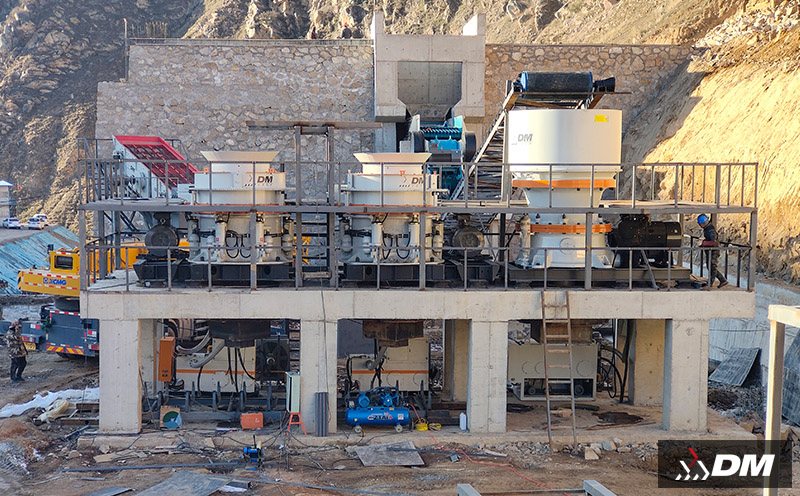
Hard rock quarries often sit on valuable reserves, but not every ton automatically becomes a premium product. Basalt, granite, and similar materials can command strong market prices when processed into clean, well-graded, high-strength aggregate. However, they can also create production challenges: high wear, inconsistent particle shape, recirculating loads, excess energy consumption, and difficulty meeting strict asphalt or concrete specifications.
A fixed cone crusher is one of the most important machines for turning hard rock into high-value aggregate. When installed in a properly designed stationary plant, it can provide stable secondary or tertiary crushing, controlled product size, and improved shape for demanding construction applications. For overseas quarry owners serving asphalt plants, concrete producers, railway contractors, and large infrastructure projects, this consistency can become a major commercial advantage.
The issue is not simply whether the quarry can crush hard rock. The real question is whether the plant can produce the right sizes, at the right quality, with predictable cost per ton. A well-selected cone crusher helps answer that question.
The Challenge of High-Spec Hard Rock Production
Hard rock aggregate markets reward quality. Asphalt producers often require consistent chips with good shape, low flaky content, and controlled fines. Concrete plants need stable grading and reliable strength. Railway and highway projects may specify tight size ranges and high durability. If a quarry cannot maintain quality, it may be forced to sell material into lower-margin applications.
Hard rock also punishes weak equipment. Abrasive stone increases liner wear. High compressive strength demands strong crushing force. Poor chamber selection can create excessive recirculation or uneven product size. If the crusher is not matched to the feed and target output, operators may constantly adjust settings, stop for maintenance, or accept inconsistent product quality.
A fixed cone crusher addresses these issues by providing a stable crushing stage with controlled compression crushing. It can reduce material efficiently while maintaining a product profile suitable for premium aggregate markets.
Why Fixed Installation Matters
Mobile crushing has its place, but high-volume hard rock aggregate production often benefits from a fixed plant layout. A stationary installation allows stronger foundations, optimized feed and discharge conveyors, surge bins, dust control, electrical infrastructure, and better access for maintenance. These elements help the fixed cone crusher operate within a stable process instead of reacting to uncontrolled feed conditions.
A cone crusher performs best when it receives consistent, well-distributed feed. In a fixed plant, a surge bin or controlled feeder can regulate material flow into the chamber. This improves crushing efficiency, liner wear pattern, and product consistency. A stable installation also allows closed-circuit screening, where oversize material returns to the crusher until it meets the required specification.
For quarries with long reserve life and steady customer demand, this level of process control can produce better long-term returns than a temporary setup.
Producing Asphalt and Concrete Aggregate
One of the strongest applications for a fixed cone crusher is the production of aggregate for asphalt and concrete. In asphalt, particle shape affects compaction, stability, skid resistance, and binder performance. In concrete, aggregate grading influences workability, strength, cement demand, and finish quality. Poorly shaped or inconsistent aggregate can create problems far beyond the quarry gate.
A cone crushing stage can help improve product shape when combined with correct chamber selection and screening. For example, a granite quarry may use primary jaw crushing, secondary cone crushing, and tertiary cone crushing to produce 5-10 mm, 10-20 mm, and 20-31.5 mm products. By adjusting the closed-side setting and maintaining steady feed, the plant can support consistent grading across multiple products.
The cone crusher is especially valuable when the market demands clean, durable aggregate with controlled size distribution. Rather than relying on one crushing stage to do too much work, the plant can use staged reduction to protect quality and equipment life.
Matching Crusher Chamber to Business Goals
A common mistake is selecting a crusher mainly by maximum capacity. Capacity matters, but chamber profile, feed size, reduction ratio, product target, and recirculating load are equally important. A fixed cone crusher should be selected according to the role it plays in the plant.
For secondary crushing, the machine may need to accept larger feed from the primary crusher and prepare material for final sizing or tertiary crushing. For tertiary crushing, the focus may shift toward product shape, finer output, and tight control. Different liner profiles and chamber designs support different outcomes.
If the chamber is too coarse, the product may require excessive recirculation. If it is too fine, the crusher may operate under high pressure and wear quickly. If the feed is not choke-fed or properly distributed, liner wear becomes uneven and product quality suffers. A strong equipment supplier should help the customer analyze feed gradation, required products, and plant flow before recommending a specific configuration.
Reducing Cost Per Ton Through Stability
In hard rock operations, cost per ton is influenced by wear parts, energy, downtime, labor, and lost production. A stable fixed cone crusher circuit helps reduce these costs by improving crushing efficiency and avoiding unnecessary stress on the machine.
Consistent feed reduces power spikes and uneven liner wear. Correct closed-side setting helps maintain target product size without over-crushing. Proper screening reduces the amount of already-sized material returning to the crusher. Good automation or monitoring can help operators detect abnormal pressure, temperature, lubrication, or vibration conditions before they cause shutdowns.
The financial benefit is not limited to lower maintenance cost. When product quality is stable, the quarry can sell more material into premium categories. The difference between general fill and asphalt-grade aggregate can be significant. Over a full operating year, better product control can have a larger impact than small differences in hourly throughput.
Maintenance That Supports Uptime
A cone crusher used in hard rock must be maintained carefully. Liners should be inspected and replaced before performance declines sharply. Lubrication systems must be kept clean and monitored. Hydraulic systems, seals, bearings, and drive components should be checked according to schedule. Feed conditions should be reviewed whenever abnormal wear appears.
A fixed installation makes maintenance planning easier. Platforms, lifting points, spare part storage, and inspection routines can be built into the plant. Operators can track liner life under specific material and setting conditions, then plan shutdowns instead of reacting to failures. This is especially important for quarries supplying large projects where missed deliveries can damage customer relationships.
Investment Return for Quarry Owners
The return on a fixed cone crusher comes from several areas: higher-quality product, better plant availability, reduced recirculation, lower waste, and stronger customer retention. If the machine allows the quarry to win asphalt plant contracts, concrete supply agreements, or infrastructure tenders, the investment value extends well beyond mechanical production.
Quarry owners should evaluate ROI based on the full product strategy. What premium sizes can the plant sell? How much material is currently downgraded? How much downtime is caused by unstable crushing? What would improved shape and grading mean for customer pricing? These questions help turn equipment selection into a business decision.
Conclusion: Hard Rock Needs Controlled Crushing
Basalt and granite can be highly profitable, but only when processed with discipline. A fixed cone crusher gives quarry operators the compression crushing power, process stability, and product control needed to serve demanding aggregate markets.
For producers aiming to move beyond basic crushed stone and into premium infrastructure supply, the right cone crusher is not simply another machine in the line. It is a key part of the quality promise made to every customer.
Get In Touch With Us