 English
 简体中文
简体中文
 عربي
عربي
 Русский
 Français
 Español
Mobile Jaw Crusher:Cut Quarry Haulage at the Face
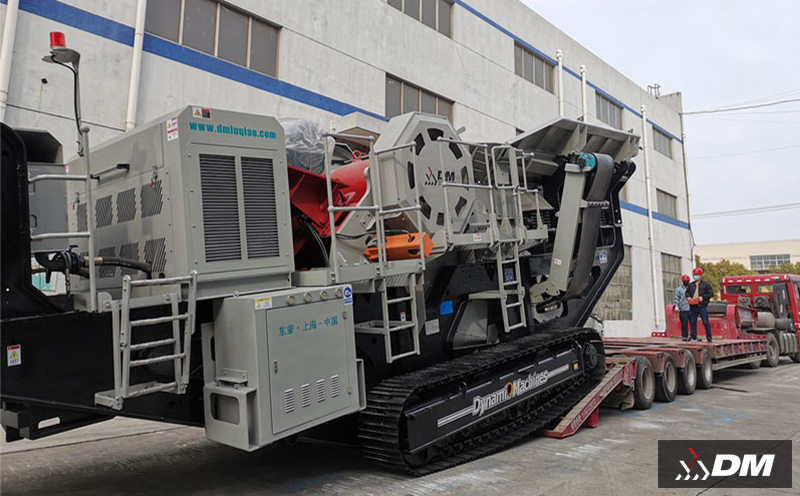
In many quarries, the primary crusher is not the only production bottleneck. The real cost may be the distance between the blast face and the crushing plant. As the working face moves deeper or farther from the fixed primary station, trucks travel longer routes, loaders spend more time waiting, roads require more maintenance, and fuel consumption rises. The plant may still have enough crushing capacity, but the material delivery system becomes expensive and inefficient.
A tracked mobile jaw crusher offers a practical solution by moving primary crushing closer to the rock source. Instead of hauling large blasted material across the quarry to a fixed crusher, producers can reduce the stone near the face and move smaller, more manageable material by conveyor, loader, or shorter truck routes. For quarry owners facing rising diesel prices, labor shortages, tire costs, and road maintenance expenses, this approach can significantly improve operating economics.
The value of a mobile jaw unit is not only mobility. It is the ability to redesign the quarry workflow around shorter movement, faster feed preparation, and better use of support equipment.
The Haulage Problem in Expanding Quarries
A quarry often begins with a simple layout. The face is close to the primary plant, haul roads are short, and trucks cycle quickly. Over time, the working area expands. Benches move farther away. Elevation changes become more severe. Road conditions deteriorate under heavy loads. What was once an efficient haulage system becomes a continuous cost burden.
Large blasted rock is difficult and expensive to move. Trucks carry fewer tons per cycle because material is bulky and irregular. Loader bucket fill may be inconsistent. Oversize rocks can delay dumping at the fixed jaw crusher. If the primary station is congested, trucks queue and burn fuel without moving production forward.
A tracked mobile jaw crusher helps solve this problem by reducing material size before long-distance movement. Once the rock is crushed at or near the face, it becomes easier to handle, transport, and feed into downstream stages.
Why Jaw Crushing Belongs Near the Face
A jaw crusher is commonly used as the first crushing stage because it accepts large feed and handles hard, abrasive rock. In a tracked mobile configuration, this primary crushing capability can follow the quarry face as operations advance. The machine can be positioned near blasted material, fed by excavator or wheel loader, and relocated as the face changes.
This setup reduces the need to haul large, uneven rocks over long distances. It can also reduce oversize-related delays at the fixed plant. Material leaving the mobile jaw is more uniform and can be directed to secondary crushing, screening, or stockpiling with fewer handling problems.
For hard rock quarries, the tracked mobile jaw crusher can work as a flexible front-end tool. It may support a fixed secondary and screening plant, feed a mobile cone or screen, or create a temporary production line for a separate bench. The machine gives quarry managers more options for matching production to geology, site layout, and demand.
Reducing Loader and Truck Congestion
Quarry productivity depends heavily on equipment coordination. If loaders wait for trucks, trucks wait at the crusher, or the crusher waits for feed, cost per ton increases. A tracked mobile jaw crusher can reduce this waste by changing the flow of material.
When crushing occurs closer to the face, trucks may travel shorter distances or carry crushed material instead of bulky rock. Loaders can focus on feeding the crusher and managing nearby stockpiles rather than chasing long haul cycles. In some layouts, crushed material can be moved by conveyor from the mobile unit toward the main processing plant, further reducing truck dependency.
The result is a more balanced operation. Support equipment is used for productive movement rather than unnecessary travel. Road wear can decline because fewer heavy trucks are carrying large rock over long distances. Fuel, tires, maintenance, and operator hours can all improve.
Application Scenarios for Quarry-Face Crushing
A tracked mobile jaw crusher is especially useful in quarries with long haul distances, multiple working benches, temporary production zones, or changing geology. For example, a granite quarry may use the mobile jaw at a new bench while the fixed plant continues processing material from the main pit. A limestone quarry may deploy the unit to a distant section where building a new fixed primary station would not be justified. A contractor operating a leased quarry may use mobile primary crushing to avoid major civil construction.
The machine can also support selective extraction. If one zone contains higher-quality stone for concrete aggregate and another zone is suitable for road base, the mobile jaw can process material separately, reducing contamination and improving stockpile control.
In remote sites, a tracked mobile jaw crusher can help start production before permanent infrastructure is fully developed. Once the site grows, the same machine can remain valuable as a satellite primary crusher or emergency backup.
Choosing the Right Mobile Jaw Configuration
Selecting the right machine requires more than checking the feed opening. Producers should evaluate feed size, rock hardness, abrasiveness, required output, daily tonnage, transport limits, fuel efficiency, and service access. The crusher chamber must be strong enough for the material, and the feeder must handle blasted rock without constant bridging.
A good tracked mobile jaw crusher should include robust undercarriage design, effective pre-screening or grizzly separation, reliable hydraulic adjustment, strong jaw plates, and safe access for maintenance. If the material contains fines or clay, pre-screening can remove some smaller material before it enters the chamber, improving efficiency and reducing wear.
The discharge arrangement also matters. The crushed product must be moved away from the machine efficiently. Conveyor height, stockpile capacity, magnet options, dust suppression, and compatibility with downstream equipment should all be considered.
Operating Discipline at the Face
Mobile crushing near the face requires planning. The machine should be positioned on stable ground with safe access for feeding and maintenance. Traffic patterns must separate excavators, loaders, trucks, and service vehicles. Operators should manage feed size and avoid sending unbreakable objects into the crusher.
Because the jaw crusher is working close to blasting areas, relocation planning is important. The unit should be moved before blasting when required, and the site team should coordinate crushing schedules with drilling, blasting, and loading activities.
Maintenance discipline remains essential. Jaw plates, cheek plates, feeder bars, belts, hydraulic systems, and tracks should be inspected regularly. Dust and vibration are part of quarry work, so daily checks help prevent small issues from becoming major downtime.
ROI Beyond Fuel Savings
Fuel savings are often the first benefit discussed, but the return on a tracked mobile jaw crusher can be broader. Shorter haul routes reduce truck hours, tire wear, road grading, and water truck use. More consistent feed to the downstream plant can improve secondary crushing efficiency. Faster access to new benches can support production flexibility. Reduced congestion can improve safety and site organization.
For quarry owners, the strongest ROI comes when mobile primary crushing is treated as a workflow improvement rather than a standalone machine purchase. The question should be: how much unnecessary material movement can be removed from the operation?
Conclusion: Move the Crusher, Not the Rock
As quarries expand, haulage can quietly consume profit. A tracked mobile jaw crusher allows producers to place primary crushing where it creates the most value: close to the face, close to the feed, and close to the real cost problem.
For operations looking to reduce truck cycles, improve site flow, and extend the economic life of existing quarry layouts, mobile jaw crushing provides a practical path to lower cost per ton.
Get In Touch With Us