 English
 简体中文
简体中文
 عربي
عربي
 Русский
 Français
 Español
Flexible Crusher Aggregate Solutions for Highway Construction
Crushers for highways, expressways, mine roads and infrastructure projects in remote areas, there is a very practical challenge: qualified stone sources are not always located close to construction sites. If semi‑finished stone materials have to be transported over long distances from fixed quarries to various construction points, costs for fuel, trucks, labor and waiting time will rise rapidly. Meanwhile, project progress is highly dependent on the continuous supply of aggregates for roadbed bedding, asphalt concrete, cement concrete or drainage works.
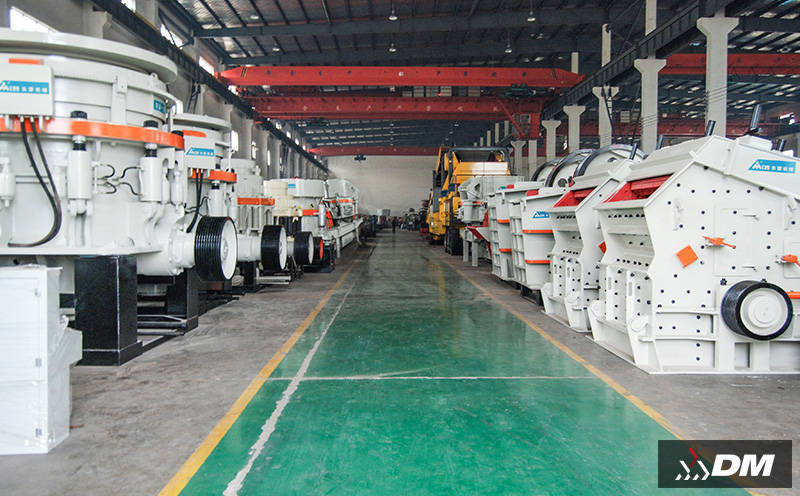
Against this backdrop, track‑mounted mobile cone crushers have become a preferred option for contractors who want to bring secondary or fine crushing capacity close to material sources. The equipment not only solves mobility problems, but also helps directly control the size, gradation and stability of finished stone on‑site. When combined with primary jaw crushers, mobile screening machines and suitable belt conveyors, it creates a flexible aggregate production line for engineering projects with constantly changing construction sites.
When Transportation Becomes the Largest Hidden Cost
In many infrastructure projects, the expense of purchasing stone is only part of the total cost. Most additional costs come from repeated material transportation: from quarry to crushing station, from crushing station to transfer yard, and then from transfer yard to construction site. Such costs will increase sharply for mountainous terrain, temporary roads with poor load‑bearing capacity or long hauling distances. In addition, heavy reliance on fixed crushing stations makes construction progress highly vulnerable to congested transport routes, bad weather or unstable external material supply.
Track‑mounted mobile cone crushers reshape production organization. Contractors no longer need to haul all materials back to a fixed location, but can move equipment close to quarry zones or construction sites. Materials after primary crushing are further processed on‑site. This reduces transportation volume of large coarse stones and raises the proportion of transportable finished products with direct application value. It is especially suitable for long‑distance highway projects where construction positions change along project phases.
Cone Crushing’s Critical Role in Aggregate Quality
For highway construction, aggregates must not only meet size specifications, but also deliver sufficient strength, stable gradation and controlled content of flaky and elongated particles. Track‑mounted mobile cone crushers are generally arranged behind jaw crushers to reduce particle size of highly abrasive hard rocks such as granite, basalt and river pebbles. With the laminated crushing principle, cone crushers produce highly uniform products, which are well‑suited for graded crushed‑stone bedding courses, concrete aggregates and asphalt pavement materials.
In practical operations, many contractors face the problem of excessively coarse discharge from primary equipment, which overloads screening machines and generates large quantities of off‑size products. Adding track‑mounted mobile cone crushers into production lines makes particle‑size reduction more controllable. It improves screening accuracy and cuts the volume of stone requiring re‑crushing. In closed‑circuit configuration, over‑sized materials return automatically to the crushing chamber to generate stable product flow without excessive manual intervention.
Perfect Adaptation to Changing Construction Sites
The biggest advantage of tracked equipment lies in its outstanding adaptability to construction sites. For mountain highway projects, open‑pit mining or industrial‑park infrastructure, production sites often need relocation as mining zones shift. Fixed production lines require foundation construction, steel‑structure erection and lengthy installation time. In contrast, track‑mounted mobile cone crushers can relocate as projects proceed, greatly shortening preparation time and lowering costs for temporary station setup.
Track‑driven self‑propulsion enables reliable operation on uneven terrain. Contractors can position machines near material sources and easily adjust locations when stockyards, routes or feeding points change. For overseas projects with complicated equipment mobilization and site‑permit approval procedures, such flexibility helps reduce the risk of schedule delays.
Optimize Production‑line Configuration According to Target Products
A typical configuration consists of mobile jaw crushers for coarse raw stone processing, track‑mounted mobile cone crushers for secondary crushing, and mobile screening machines for sorting materials into different specifications. For projects requiring stone fractions of 0‑5 mm, 5‑10 mm, 10‑20 mm and 20‑30 mm, screening machines can be fitted with multi‑deck screens while over‑sized materials circulate back to cone crushers. If bedding‑stone demand exceeds fine‑aggregate demand, discharge gaps and screen decks can be adjusted to prioritize production of target‑size products.
It should be emphasized that equipment selection must not depend solely on nominal capacity figures. Actual output is determined by material hardness, feed size, moisture, recirculating load and end‑product requirements. A properly‑selected track‑mounted mobile cone crusher must match upstream and downstream equipment perfectly. Excessive large‑sized feed from jaw crushers will overload cone crushers; undersized screening machines lead to material blockage even when crushers still have processing capacity. Therefore, systematic design from the perspective of the whole production line is always more important than selecting individual machines separately.
Economic Benefits for Contractors
In terms of costs, the most notable benefits are reduced coarse‑material transportation and lower dependence on third‑party aggregate suppliers. When contractors can produce stone locally, they gain better control over costs, schedules and quality. This is especially valuable for contracts with liquidated‑damages clauses or continuous‑supply requirements. Track‑mounted mobile cone crushers also make full use of local stone resources, converting nearby on‑site materials into qualified finished goods and avoiding long‑distance procurement.
From a management perspective, mobile production lines allow contractors to respond quickly to shifting product demands. Projects may need large volumes of bedding stone in early phases and concrete or asphalt aggregates in later stages. By adjusting discharge gaps, feeding rates and screen panels, operation teams can modify product proportions without rebuilding fixed stations. Such flexibility enhances contractors’ competitiveness when bidding for complex infrastructure projects.
On‑site Operation and Maintenance
Mobile equipment operates under harsh conditions with fluctuating dust, vibration and load, so maintenance is critical. For track‑mounted mobile cone crushers, operation teams shall regularly inspect hydraulic systems, lubricating oil, bearing temperature, crushing‑chamber pressure, liner wear and belt‑conveyor conditions. Consistent and even feeding is decisive: insufficient feed reduces laminated‑crushing efficiency, while over‑feeding causes overload and accelerated wear.
Professional suppliers shall deliver full‑range support including installation, operator training and parameter optimization after commissioning. For overseas projects, spare‑parts supply and remote technical guidance are equally important as the equipment itself. With standardized maintenance procedures, track‑mounted mobile cone crushers can maintain stable output under tough site conditions.
Conclusion
For highway and infrastructure projects requiring flexible aggregate supply, track‑mounted mobile cone crushers are more than secondary‑crushing machines. They serve as powerful tools for contractors to control costs, manage schedules and guarantee material quality. Their site‑to‑site mobility, hard‑rock processing capability, stable‑gradation output and closed‑circuit design make them ideal for projects demanding high on‑site construction efficiency. With proper configuration, contractors can substantially cut transportation costs, gain greater initiative and improve competitiveness in international infrastructure tenders.
Get In Touch With Us