 English
 简体中文
简体中文
 عربي
عربي
 Русский
 Français
 Español
Better Aggregate Starts With Cone Crusher
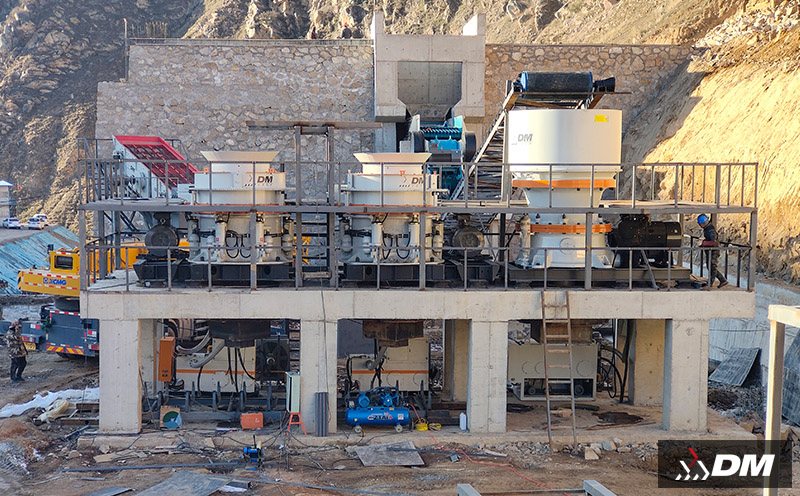
Better Aggregate Starts With Cone Crusher
In competitive aggregate markets, volume alone is no longer enough. Producers are under pressure to supply material that meets tighter specifications for concrete, asphalt, railway ballast, and high-value road construction. Buyers want consistency, better particle shape, fewer flaky products, and dependable delivery. When the finished product does not meet those expectations, the problem is often traced back to one stage in the plant: secondary or tertiary crushing.
This is where the fixed cone crusher becomes essential. For many permanent plants, it is the machine that transforms acceptable production into premium production. While primary crushing focuses on reduction and stability, cone crushing is where shape control, gradation discipline, and downstream efficiency begin to influence final product value.
For overseas quarry and mining customers, the fixed cone crusher should not be viewed as just another crusher in the line. It is a solution for protecting product quality, increasing usable output, and making the whole plant more commercially competitive.
Why Producers Struggle to Reach Premium Specs
Many plants can produce aggregate. Far fewer can produce high-quality aggregate consistently. The difference often lies in how well the crushing circuit controls particle shape and feed preparation.
Common customer pain points include:
Too much elongated or flaky material
Poor particle shape can reduce acceptance in concrete and asphalt applications.
Inconsistent gradation across product sizes
This creates customer complaints and stockpile management issues.
Excess recirculation and energy waste
If the crushing stage is not optimized, too much material returns through the circuit.
Difficulty balancing capacity with product quality
Some operations push tonnage but sacrifice value by producing less saleable material.
A well-configured fixed cone crusher helps solve these issues because it is designed for controlled compressive crushing, efficient reduction ratios, and better product shaping in the secondary and tertiary stages.
What Makes a Fixed Cone Crusher So Valuable
The core strength of a fixed cone crusher is precision under load. In permanent aggregate plants, the machine can be installed with optimized feed arrangement, surge capacity, screening integration, and automation logic. This creates a more stable environment than temporary or improvised crushing setups.
Because the unit works with a consistent, prepared feed from the primary stage, the crushing chamber can operate closer to its intended design window. This improves liner utilization, product consistency, and throughput efficiency.
For hard and abrasive rock such as granite, basalt, and andesite, the fixed cone crusher provides a particularly strong advantage. It offers durable compression crushing that supports both capacity and product quality without the excessive wear pattern often seen when unsuitable machines are used in the same role.
Permanent installation also allows for better lubrication systems, safer maintenance access, dust control, and integration with plant automation. These supporting factors may seem secondary at the purchase stage, but they strongly affect uptime and life-cycle cost.
Application Scenarios Where It Delivers the Most Value
The fixed cone crusher is especially effective when the business depends on producing spec-driven aggregate rather than just reducing rock.
Premium concrete aggregate plants
Where cubical shape and controlled fines content improve downstream concrete performance.
Asphalt stone production
Uniform particle shape helps compaction, binder efficiency, and pavement quality.
Railway and infrastructure materials
Projects often require tighter specification compliance and predictable gradation.
Hard rock quarrying
Cone crushing handles abrasive stone efficiently in the secondary and tertiary stages.
Mining-related stone processing
Where durable secondary reduction is needed before screening or further beneficiation.
In each of these settings, the machine is not only reducing rock. It is helping the producer protect product margin.
How a Fixed Cone Crusher Improves Saleable Output
One of the most important commercial benefits of a fixed cone crusher is that it increases the proportion of material that can be sold into higher-value applications.
Better chamber design and controlled crushing action reduce the share of poorly shaped material. When the output is more cubic and better graded, more tons can qualify for demanding markets. That means fewer downgraded products and better selling prices.
It also improves circuit stability. With the right screen arrangement, the fixed cone crusher can maintain a more disciplined load profile. This reduces fluctuations in recirculating load and lowers the chance of the plant chasing unstable settings all day.
For plant managers, this consistency simplifies production planning. Instead of constantly adjusting to recover product quality, the plant can run toward stable, repeatable targets.
Selection Logic: What Buyers Should Look At
Choosing a fixed cone crusher requires a broader view than simply comparing maximum feed size or motor power. The correct choice depends on rock type, desired end products, expected capacity, and the crushing stage in which the machine will work.
Chamber type matters. Coarse, medium, and fine chamber options are not interchangeable decisions; they affect reduction behavior, liner wear, and finished gradation. Closed side setting, eccentric throw, and automation capability also influence how the machine responds to varying feed conditions.
International buyers should also examine serviceability. A strong machine with poor access to liners, adjustment systems, or lubrication points can create unnecessary downtime. Spare parts planning is critical for overseas sites where resupply lead time may be long.
If the plant is designed for future expansion, the fixed cone crusher should fit into that roadmap. Can it support another screen deck later? Can the circuit be upgraded for more products? A crusher that aligns with future plant strategy is usually a better investment than one chosen only for the current bid.
Operations and Maintenance That Protect Performance
A cone crusher performs best when it is fed consistently and operated within its designed chamber conditions. Segregated feed, excessive fines, or irregular loading can reduce efficiency and accelerate wear. This is why proper surge bin design, feeder control, and pre-screening are so important.
Maintenance should focus on liner wear tracking, lubrication health, and crusher setting verification. When these basics are managed well, the fixed cone crusher becomes a highly predictable production asset. When they are neglected, even a good machine will struggle.
Automation adds value here. Modern control systems can help stabilize load, protect against overload, and support more consistent operation across shifts. For overseas customers managing multiple crews or long operating hours, this can reduce human error and improve plant reliability.
The Financial Case Is Stronger Than Many Buyers Expect
Some buyers hesitate because a high-quality fixed cone crusher can require a meaningful capital commitment. But the return is often larger than expected because it comes from several directions at once.
More premium-spec product
Better shape and gradation improve access to higher-value markets.
Lower rehandling and recirculation cost
A stable circuit wastes less energy and time.
Improved plant uptime
Permanent installation with proper service access supports better maintenance discipline.
Longer-term competitiveness
The ability to meet stricter customer requirements protects market position.
In other words, the machine does not simply add tons. It improves the quality and profitability of the tons already being produced.
Conclusion
The fixed cone crusher is one of the most important machines in a modern aggregate plant because it sits at the point where production volume meets product value. For producers serving demanding markets, it provides the precision, durability, and consistency needed to turn crushed rock into premium saleable material.
Overseas customers who want stronger product quality, more stable secondary crushing, and better long-term returns should evaluate the fixed cone crusher not as a cost center, but as a quality engine. In many plants, it is the equipment that makes premium aggregate possible on a repeatable, profitable basis.
Get In Touch With Us